Ai Content Generation Tool+2 more
Digital Content Creation SoftwareCreative Professional Tools
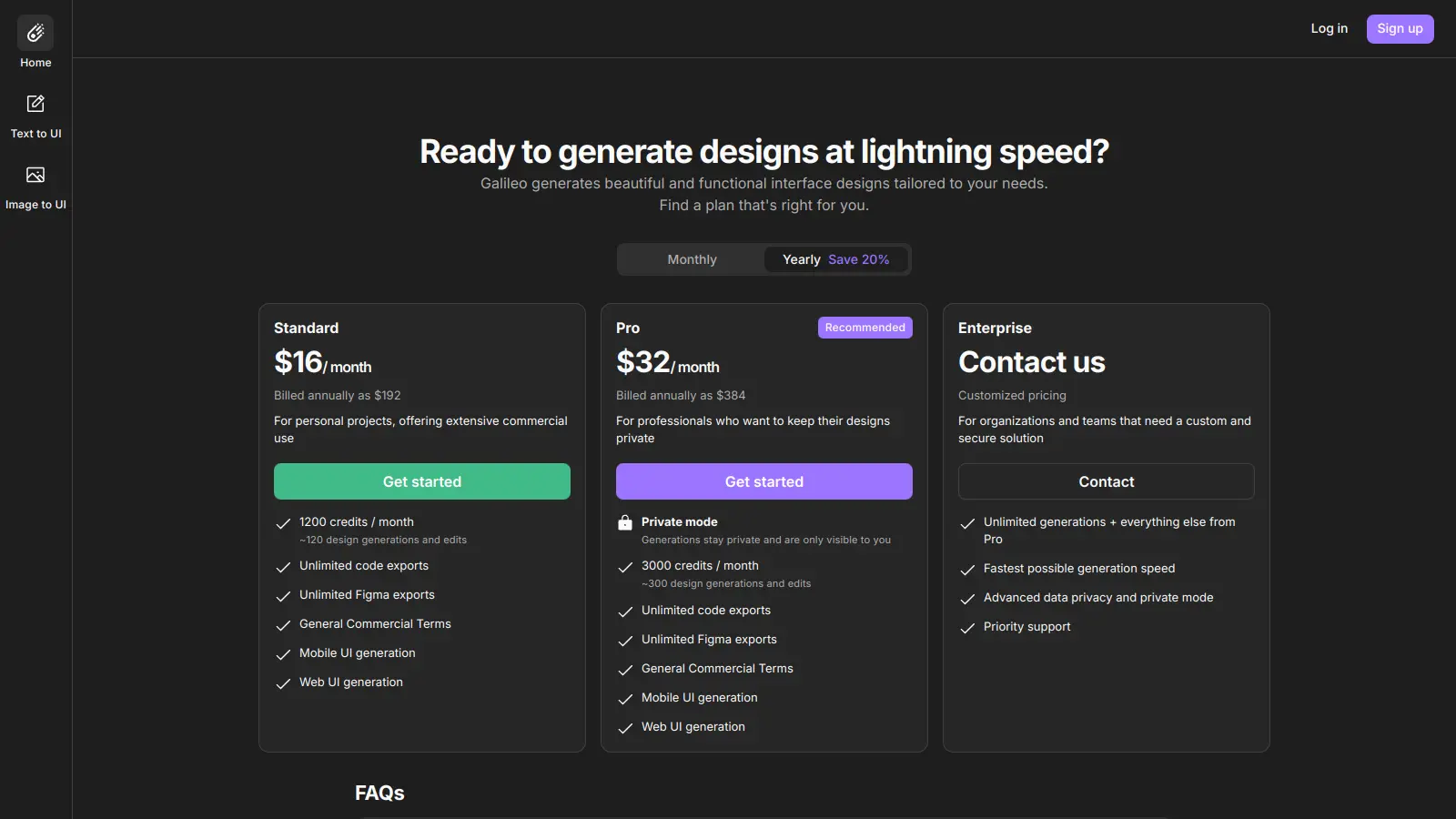
Galileo AI
best deal
Free tier available for developers to test AI observability and monitoring features
redeem nowbest deal
Free tier available for developers to test AI observability and monitoring features
redeem nowwe track global search demand across every software category, monitor what real users are saying online, identify which professions rely on each tool, and surface the questions people are actually asking. reviews are consistently updated and reviewed for reliability.
Galileo AI is an observability platform for generative AI applications and agents. It detects hallucinations, errors, and failure modes in production AI systems.
The platform offers three core modules: Observe for real-time monitoring, Evaluate for testing models without ground truth data, and Protect for runtime guardrails. It works with RAG systems, multi-agent applications, and multimodal AI, integrating with tools like Google Cloud, Vertex AI, and BigQuery.
Galileo uses distilled Luna models for production monitoring, cutting costs by 97% compared to traditional approaches. The platform surfaces patterns in AI behavior, prescribes fixes, and helps teams move from evaluation to guardrails as part of a continuous improvement cycle.
Available as web-based SaaS, Virtual Private Cloud, or on-premises deployment, Galileo serves companies like HP, Twilio, Reddit, and Comcast. Pricing details are available through their sales team.
Galileo AI is for developers and teams running generative AI in production who need to catch failures before users do.
If you're shipping GenAI features, you need visibility into what breaks and why.
overall sentiment
select your role to see what people like you are saying
ML Engineer (Production Monitoring)
positiveML Engineers managing production GenAI systems appreciate Galileo's ability to catch hallucinations and runtime failures before users encounter them. The specific error attribution and insights engine provide actionable debugging data rather than generic metrics, making incident response faster.
strengths
concerns
AI Startup Founder/Developer
mixedStartup founders building GenAI products see value in production-grade observability without hiring dedicated monitoring teams, but face friction around opaque pricing that makes early-stage budgeting uncertain. The tool de-risks shipping AI features, though customization limitations may require workarounds.
strengths
concerns
Product Manager (AI Features)
positiveProduct managers deploying AI features value Galileo's ability to catch failure modes early and understand real-world system behavior before those failures reach users. The platform provides the behavioral insights needed to make informed decisions about AI feature rollouts.
strengths
concerns
Enterprise AI Architect (Large Organization)
positiveEnterprise architects at scale benefit from Galileo's production-grade observability that serves companies like HP and Comcast managing multiple GenAI applications. The platform delivers the reliability and cost efficiency needed for mission-critical AI deployments across teams.
strengths
concerns
Users praise Galileo for catching hallucinations and errors that would have slipped into production. Teams report the insights engine actually points them to specific problems instead of just showing metrics. The 97% cost reduction claim holds up for teams previously running expensive monitoring models on every request.
Complaints center on the learning curve for teams new to AI observability concepts. Some users want more customization in how guardrails behave. The pricing isn't transparent upfront, which frustrates smaller teams trying to budget. A few reviewers mention the platform works better with certain AI architectures than others, particularly noting RAG systems get more attention than simpler setups.
Galileo AI is an observability platform for generative AI applications that detects hallucinations, errors, and failure modes. It monitors production performance, evaluates model behavior without ground truth data, and provides runtime guardrails. You catch issues before users report them and understand exactly how your AI systems behave in production.
How does Galileo reduce monitoring costs by 97%?Galileo uses distilled Luna models that are much smaller and cheaper to run than full-scale language models for monitoring tasks. Traditional observability approaches often require running expensive models on every request to check for issues. Luna models are trained specifically for detection tasks and run efficiently at scale, dramatically cutting compute costs while maintaining detection accuracy.
Can I use Galileo with my existing AI infrastructure?Yes, Galileo integrates with common tools like Google Cloud, Vertex AI, and BigQuery. It works with RAG systems, multi-agent architectures, and multimodal AI applications. You can deploy it as SaaS, in a Virtual Private Cloud, or on-premises depending on your security requirements. The platform is designed to fit into existing workflows rather than requiring you to rebuild your stack.
What's the difference between the Observe, Evaluate, and Protect modules?Observe monitors your AI applications in real-time and tracks performance metrics. Evaluate helps you test and compare different models or prompts without needing labeled data, including agent leaderboards. Protect runs guardrails at runtime to catch and block problematic outputs before they reach users. Most teams use all three modules together as part of a continuous improvement cycle.
Do I need machine learning expertise to use Galileo effectively?You need familiarity with AI applications and basic understanding of concepts like hallucinations and model behavior. Galileo is built for developers working with GenAI, not data scientists building models from scratch. If you're already deploying AI features or agents, you have enough background to use the platform. The insights engine prescribes specific fixes, so you don't need to diagnose every issue manually.
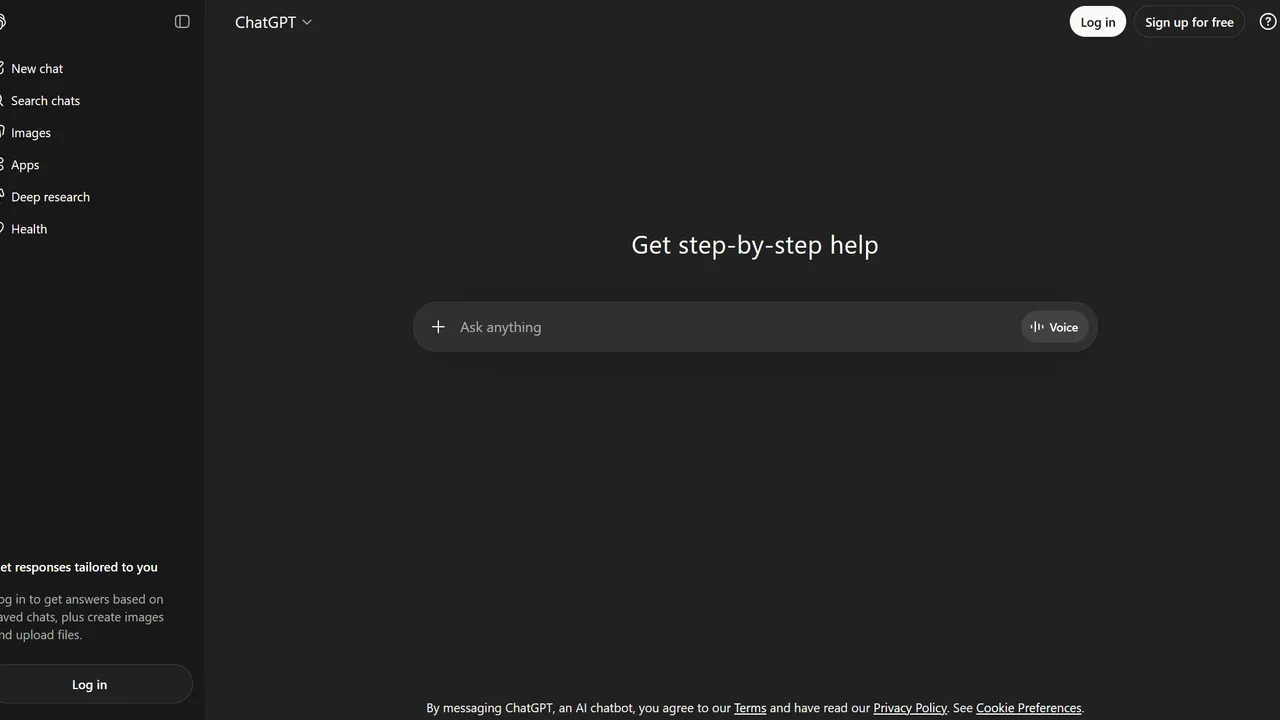
ChatGPT is an AI chatbot by OpenAI that uses language models to hold conversations, generate content, and complete tasks. It includes web browsing, image generation and analysis, voice interaction, autonomous task automation, and custom GPT creation. Available in multiple pricing tiers from free to enterprise, ChatGPT handles creative writing, data analysis, coding, and real-world automation.
best deal
Try ChatGPT Free: Basic AI conversations with GPT-5.2 Instant access (around 10 messages every 5 hours) at no cost.
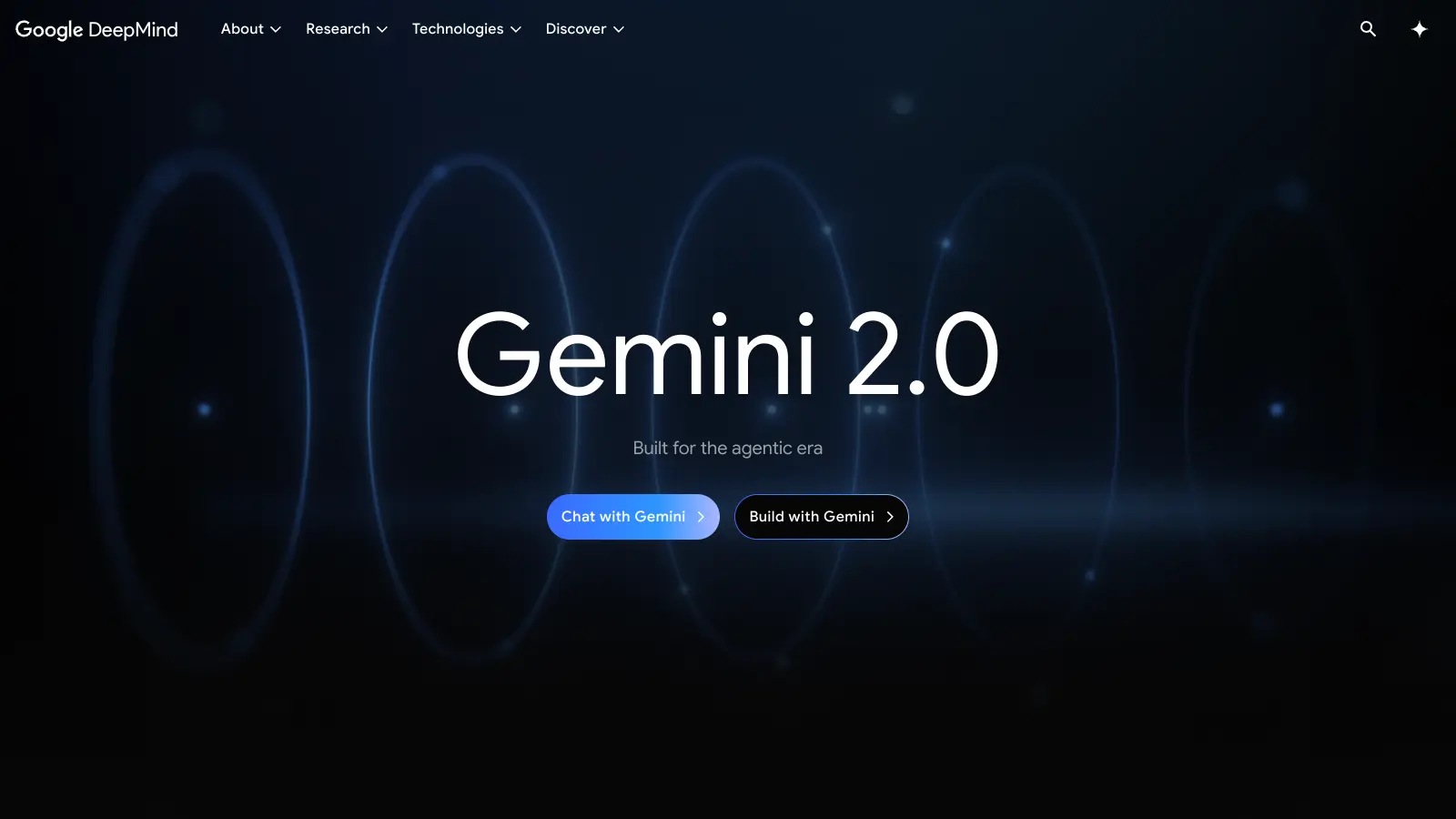
Gemini is an advanced AI assistant by Google that processes text, code, images, audio, and video across Google's ecosystem. It offers content creation, coding assistance, research capabilities, and workflow automation through the Gemini app, web interface, and integrations with Google Workspace, Pixel phones, and Chrome.
best deal
Google AI Plus: Get 50% off at $3.99/month for the first 2 months (new subscribers); Google AI Pro: Try free for one month.
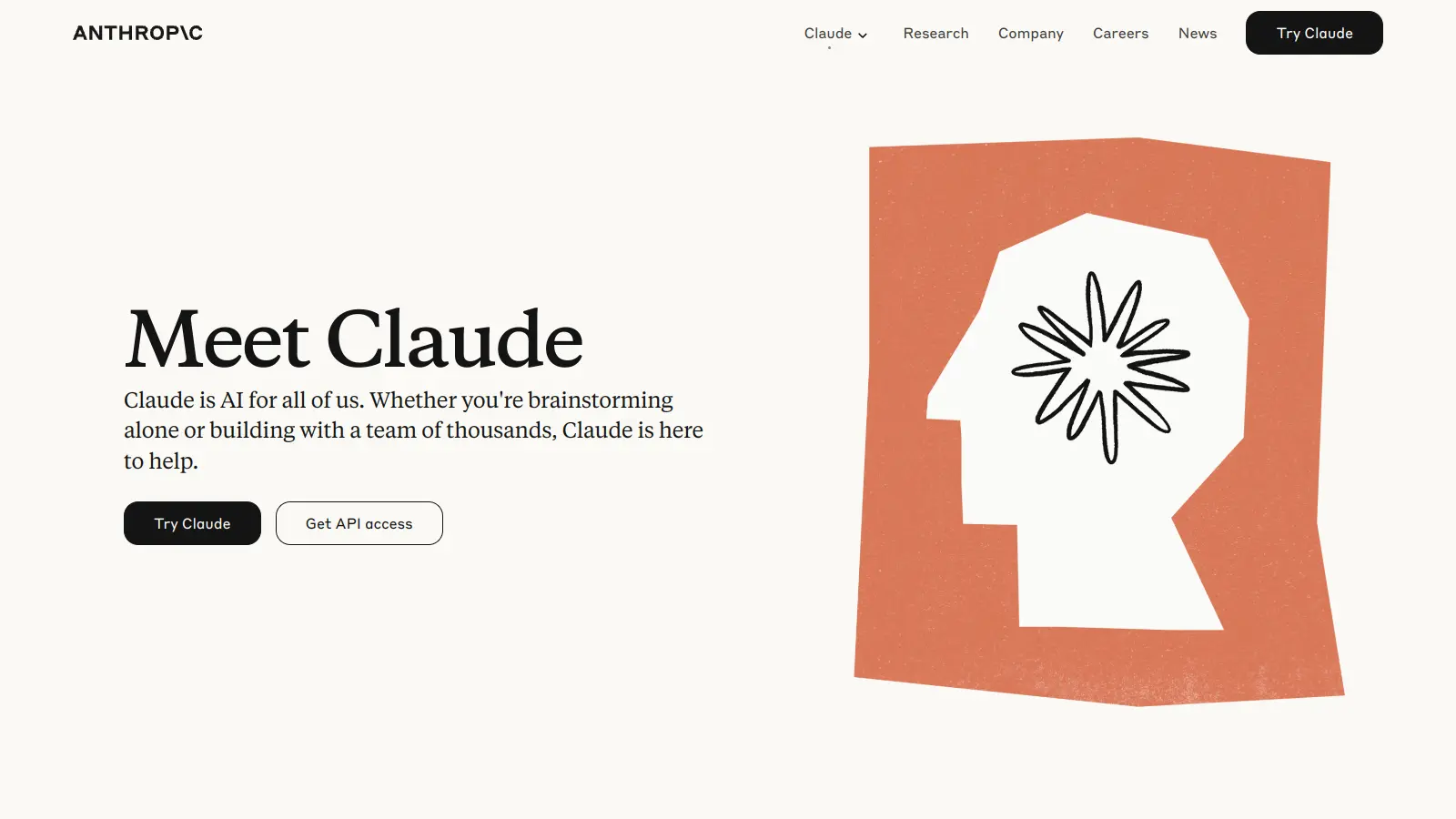
Claude is an AI assistant developed by Anthropic that handles coding, writing, and analysis tasks. It uses Constitutional AI for safety-focused interactions, supports multiple languages, and offers models like Sonnet and Opus with different capabilities. Claude prioritizes user privacy and context-aware responses.
best deal
Try Claude Free - 30-100 daily messages with code generation, image analysis, web search, and access to Claude's latest models
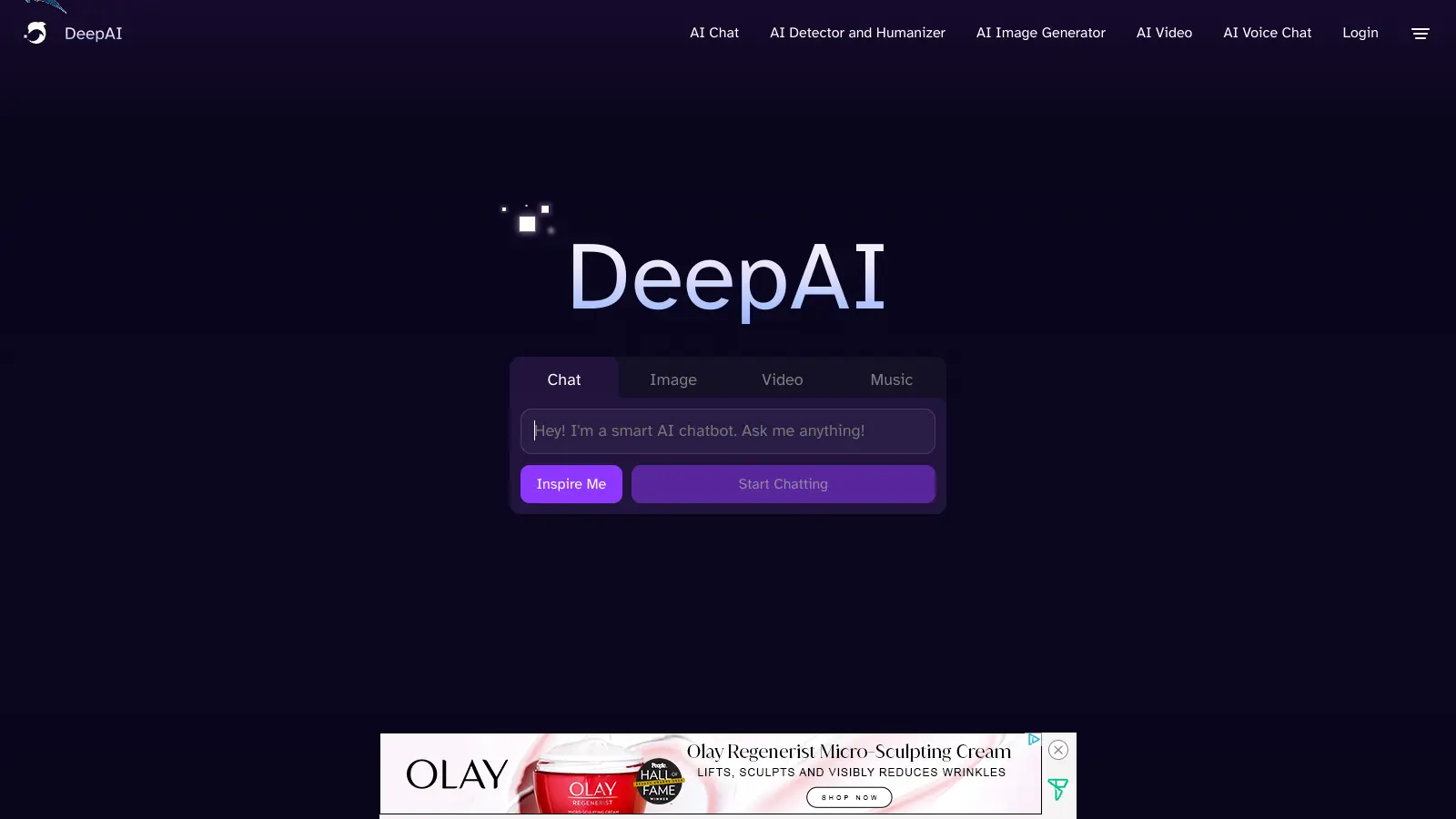
DeepAI is an AI platform offering creative tools including image generation, video creation, chatbot interactions, music generation, and text processing. Designed for users with varying technical skills, it provides affordable pricing options.
best deal
DeepAI Pro yearly plan at $89.99/year saves $29.89 compared to monthly billing (equivalent to 3 months free)

Microsoft Copilot is an AI-powered assistant that provides real-time help across Microsoft apps and platforms. It uses advanced language models to automate tasks, generate content, analyze data, and provide suggestions while integrating with Microsoft 365 applications like Word, Excel, Teams, and Outlook.
best deal
Try Microsoft Copilot Chat free with your eligible Microsoft 365 subscription, or get Copilot Business at $18/month promotional pricing for small businesses.
Perplexity AI is an AI-powered search engine that provides real-time, conversational responses to user queries. Founded in 2022, it uses natural language processing and large language models to deliver answers with source transparency. The platform offers multiple search modes, supports file and image uploads, and provides both free and paid plans for individual users and businesses.
best deal
Try Perplexity Free - Get unlimited basic searches with citations, 5 daily Pro Searches, and save your search history with access to basic AI models.