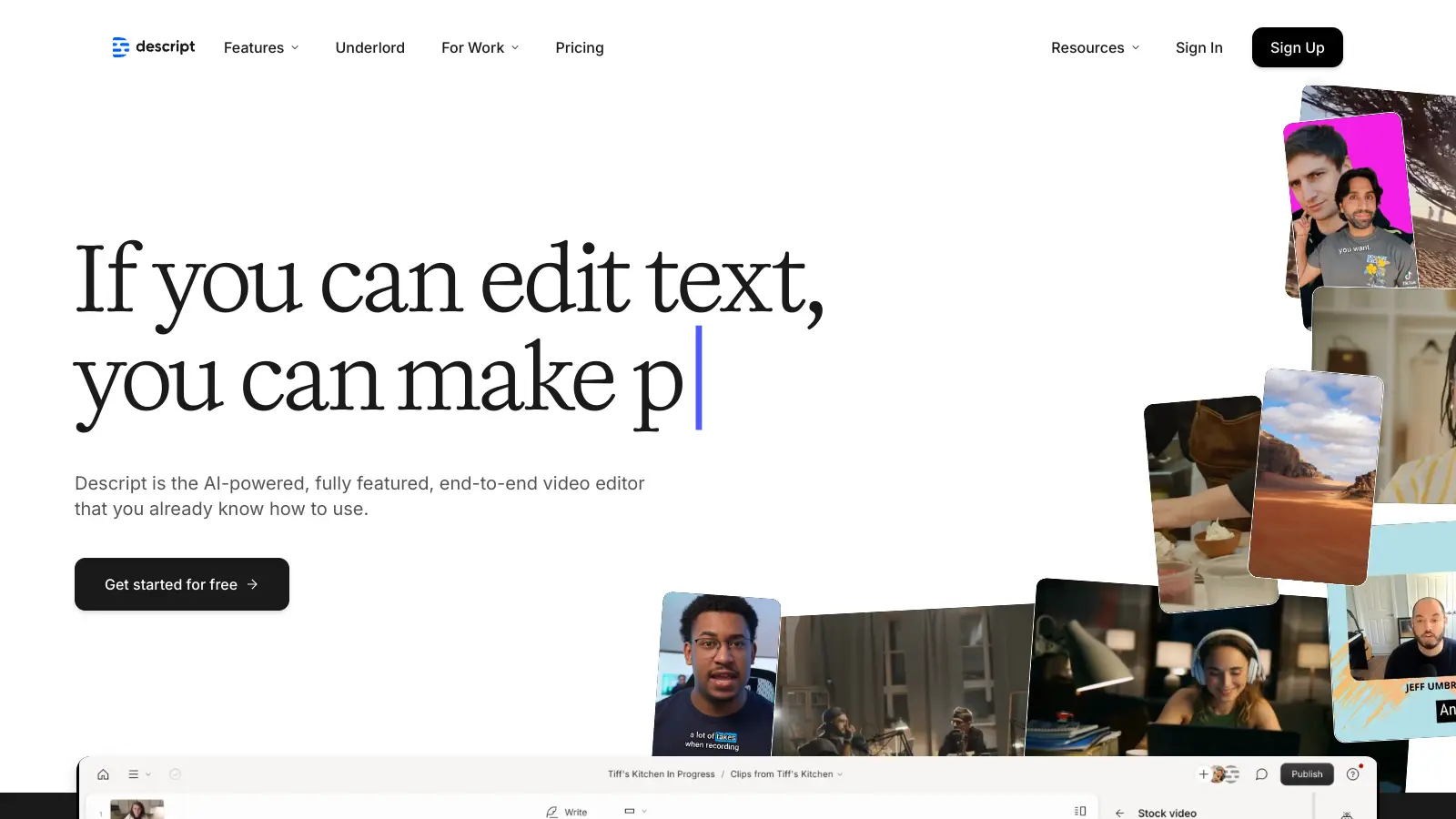
Descript brings together video and audio editing with AI capabilities. Instead of working directly with audio or video files, users edit their media by modifying transcripts, much like editing a document.
The platform combines several key features into one workspace. Users can transcribe content in 23 languages, remove background noise, and clone voices for audio corrections. The tool offers different editing views - traditional timeline editing, a canvas mode for arranging elements, or a script view. A new AI assistant called Underlord can automate tasks like removing filler words or generating highlight reels for social media.
Teams can work together in real-time on projects, with changes syncing automatically to the cloud. Content creators can publish directly to platforms like YouTube, while podcast producers can connect with hosting services. The tool also supports features like eye contact correction, automatic captions with translation in over 30 languages, and green screen background removal.
Available as a web-based platform, Descript offers several pricing tiers. The free plan includes 1 hour of transcription per month and 720p exports with a watermark, while paid plans unlock 4K exports, advanced AI features, and collaboration tools.
Descript works best for content creators and media professionals who edit audio and video. It saves hours of editing time by allowing users to modify media by editing transcripts.
Corporate training departments and educational institutions also use it to create polished audio and video content without the steep learning curve of traditional editing software.
Descript gets praise for its transcription accuracy, especially with technical content. Users say the interface makes editing easier than traditional video software. The time savings on video and podcast production stand out, along with auto-caption generation and the ability to repurpose content across multiple platforms. Customer support and documentation get positive mentions, and many users find the pricing affordable compared to professional editing suites.
Transcription struggles with accents and background noise. Advanced features have a learning curve. Subscription costs add up for power users. The free tier export quality is limited to 720p with a watermark. Long videos can cause lag. Multiple speakers talking at once confuse the system. Some users report audio sync issues. The tool needs a stable internet connection - offline functionality is limited.
Descript lets you edit audio and video by editing text. When you upload your media, Descript creates a text transcript that syncs with your recording. If you delete words from the transcript, those words get removed from your audio or video automatically. It works like editing a document - cut, copy, paste, delete - but these changes happen to your media too. This makes editing much faster than traditional timeline editing where you'd need to find and cut specific sections of audio or video manually.
What's the difference between Overdub and Studio Sound?These are two different AI tools in Descript. Overdub lets you create an AI voice that sounds like you, which you can use to add new words to your recording without re-recording. It's useful for fixing mistakes or adding content later. Studio Sound removes background noise, echo, and room sound to make your recordings sound like they were made in a studio. Think of Overdub as adding new content with AI, while Studio Sound improves the audio quality of what you already recorded.
Can I collaborate with others on Descript projects?Yes. Descript has real-time collaboration features that let multiple people work on the same project at once. You can share your projects with team members who can edit, comment, or just view your work depending on what permissions you give them. All changes sync to the cloud, so everyone sees the latest version. This makes it useful for teams working on podcasts, videos, or interviews together, even if you're not in the same location.
How accurate is Descript's automatic transcription?Descript's transcription is about 95% accurate for clear audio with standard accents. It works in 23 different languages and can tell different speakers apart. The accuracy drops when there's lots of background noise, heavy accents, or technical jargon. Most users need to make some corrections, especially for names or specialized terms. Fixing mistakes is easy - you just edit the text like you would in any word processor, and Descript keeps everything synced with your media.
What happens if I run out of transcription hours?If you use up all your monthly transcription hours, you have a few options. You can wait until your plan resets the next month, upgrade to a higher-tier plan that includes more hours, or purchase additional transcription hours as a one-time add-on. The free plan offers just 1 hour per month, while paid plans give you 10-40+ hours depending on the tier. You can still edit projects you've already transcribed even if you've used all your hours - the limit only affects new transcriptions. Descript shows how many hours you have left in your account dashboard so you can keep track.


Our newsletter comes with exclusive discounts, trials and practical insights from within the industry