Best Invoicing Software for Contractors: Top Picks (2026)
7 tools reviewedlast reviewed 20 march 2026
Editorial note:this was originally published in august of 2024
Some links on this page are affiliate links. If you sign up via our link we may earn a commission, at no extra cost to you. This doesn't affect which tools we recommend or how we rank them.
Contractors deal with billing problems that most generic invoicing tools weren't built for: progress billing, retainage, change orders, and clients who need a paper trail before they'll cut a check. The wrong tool adds friction; the right one gets you paid faster.
This list covers seven invoicing tools suited to contractors, from independent tradespeople billing a handful of clients to small construction firms managing multiple concurrent projects. Each pick is assessed on invoice customisation, payment collection, job costing support, and what you actually pay.
Tools are ordered roughly from broadest appeal to most specialised. If you run a one-person contracting operation, start at the top. If you need progress billing and job cost tracking, scroll further down.
We collect first-hand reviews from people who use these tools every day — what works, what doesn't, whether it's worth paying for. We research pricing, features, and comparisons so that feedback has real context behind it. For this guide, tools were selected based on invoicing speed, automated payment tracking, and contractor-specific tax reporting features. Read our full research methodology.
help us improve this guide
tell us what you're looking for, what you're using now, and what caught your eye — takes 30 seconds.
What is invoicing software for contractors?
Invoicing software for contractors is a tool for creating, sending, and tracking payment requests for completed or in-progress work. At its core it replaces Word documents and spreadsheets with a system that handles invoice numbering, tax calculations, payment reminders, and a record of what's been paid and what hasn't.
Contractors have more complex billing needs than most freelancers. A plumber or electrician might need lump-sum invoices with materials itemised separately. A general contractor managing a six-month build needs progress billing tied to project milestones, retainage tracking, and change order documentation. Good contractor invoicing software handles at least some of that complexity without requiring a full accounting degree.
Users range from solo tradespeople who want to get paid on their phone after a job, to small construction firms that need invoicing integrated with job costing, estimates, and subcontractor management.
Full construction accounting and invoicing for established contracting firms.
General contractors and construction firms with complex billing needs
CustomPricing on request
our top pick
1
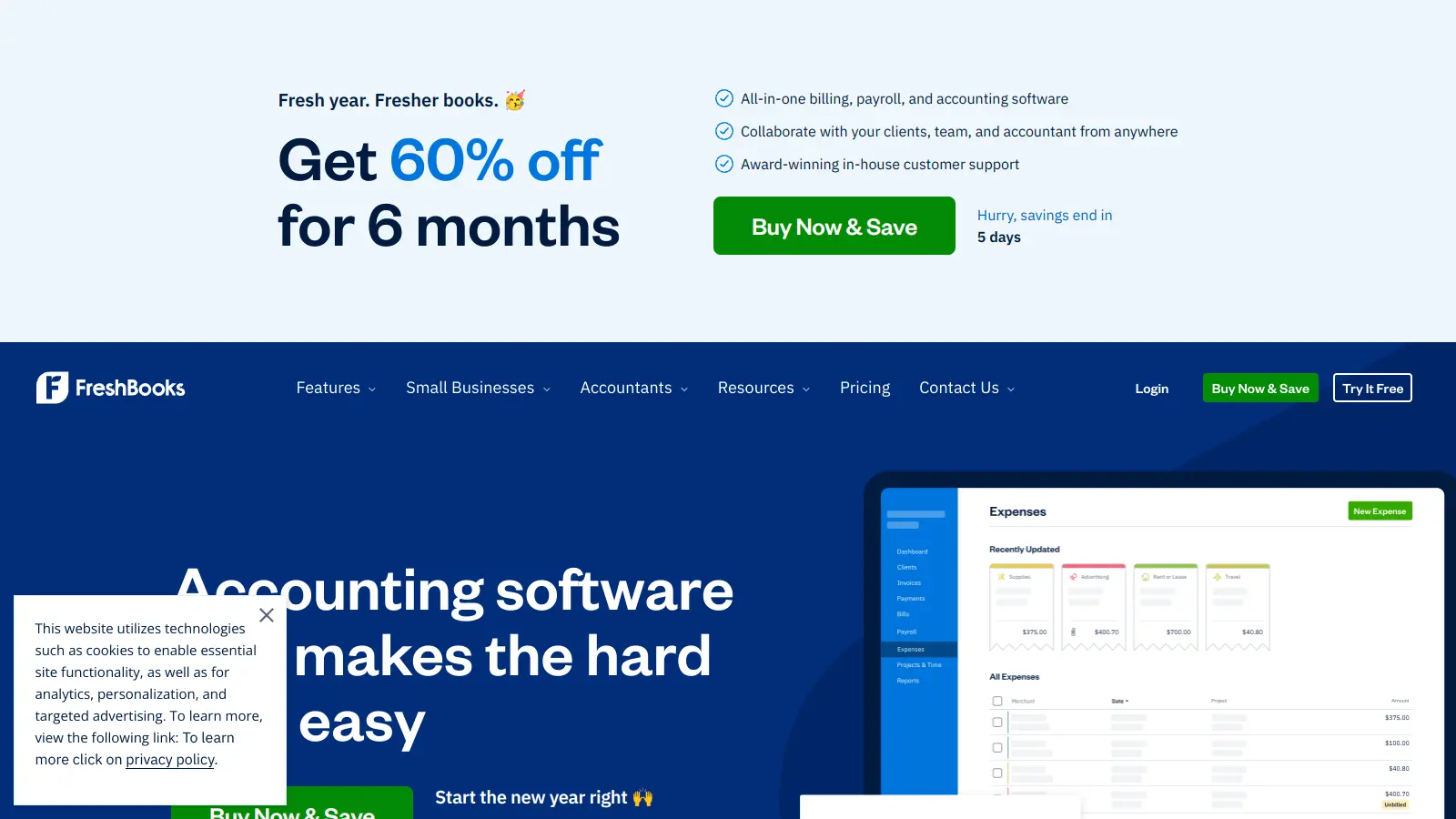
FreshBooks
Client-friendly invoicing with built-in time tracking and expenses.
Paid
Best for · Independent contractors and tradespeoplePricing · From $19/mo
FreshBooks is an accounting and invoicing platform built for self-employed people and small service businesses. Contractors get customisable invoice templates, automated payment reminders, late fee settings, and the ability to accept credit cards and ACH payments directly from the invoice. Time tracking ties into invoicing, so billable hours convert to invoice line items without manual entry.
Pros
✓Automatic payment reminders reduce late payments
✓Time tracking feeds directly into invoices
✓Mobile app lets you invoice on-site after a job
Cons
✗Client limits on lower plans force upgrades quickly
Invoicing plus full bookkeeping in one widely supported platform.
Paid
Best for · Contractors who need invoicing and accounting in one placePricing · From $35/mo
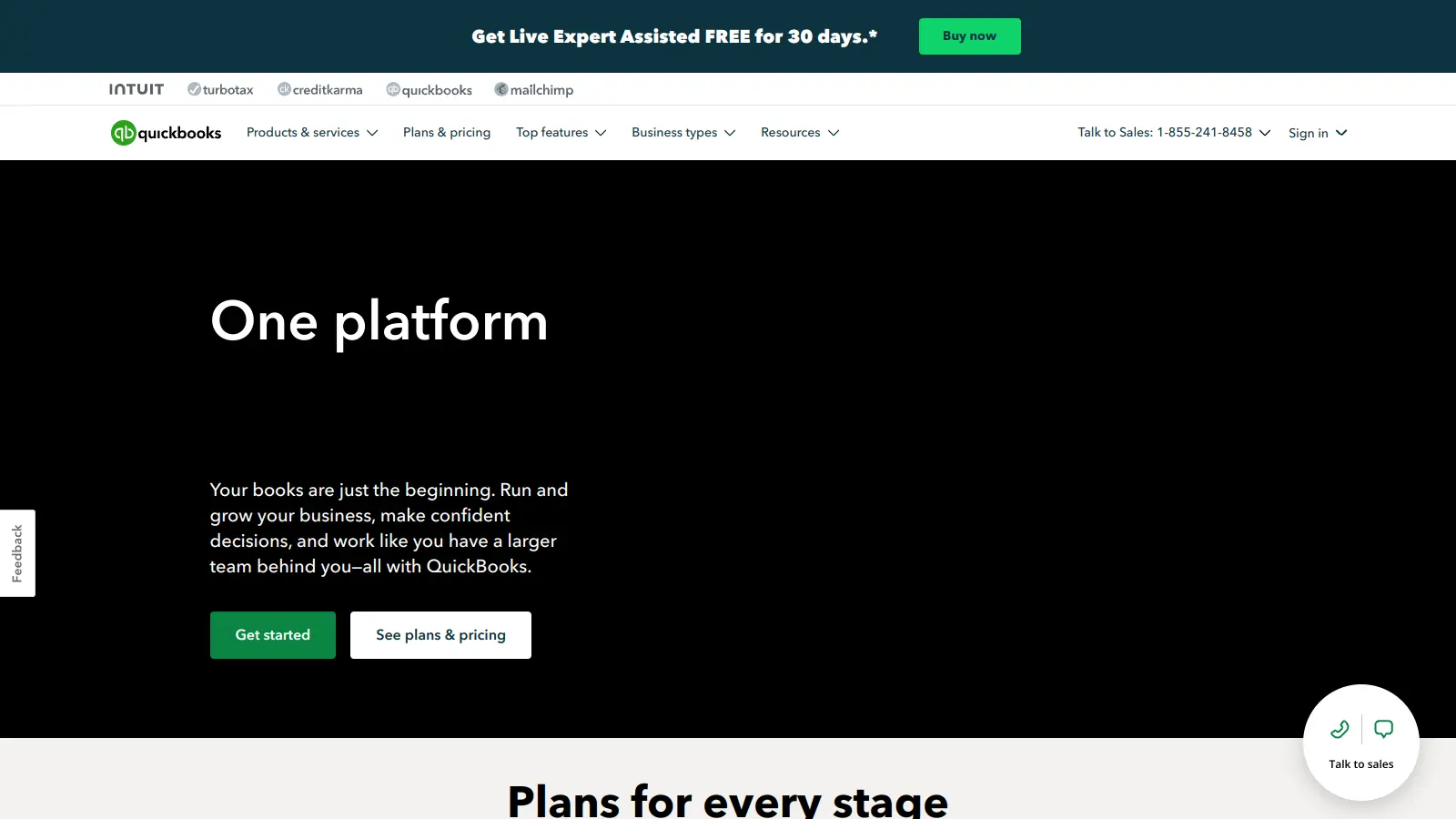
QuickBooks Online combines invoicing with a full accounting suite, which makes it practical for contractors who want one tool for billing, expenses, and tax prep. You can create estimates, convert them to invoices, and track payment status across multiple clients. Its contractor-relevant features include job profitability tracking on higher plans and direct integration with hundreds of construction-adjacent apps.
Pros
✓Estimate-to-invoice conversion saves re-entry time
✓Widely supported by accountants and bookkeepers
✓Job profitability tracking on higher plans
Cons
✗Pricing increases significantly after introductory period
✗Interface has a steeper learning curve than simpler tools
Free invoicing and accounting for contractors with straightforward billing.
Freemium
Best for · Solo contractors keeping costs lowPricing · Free (payment processing fees apply)
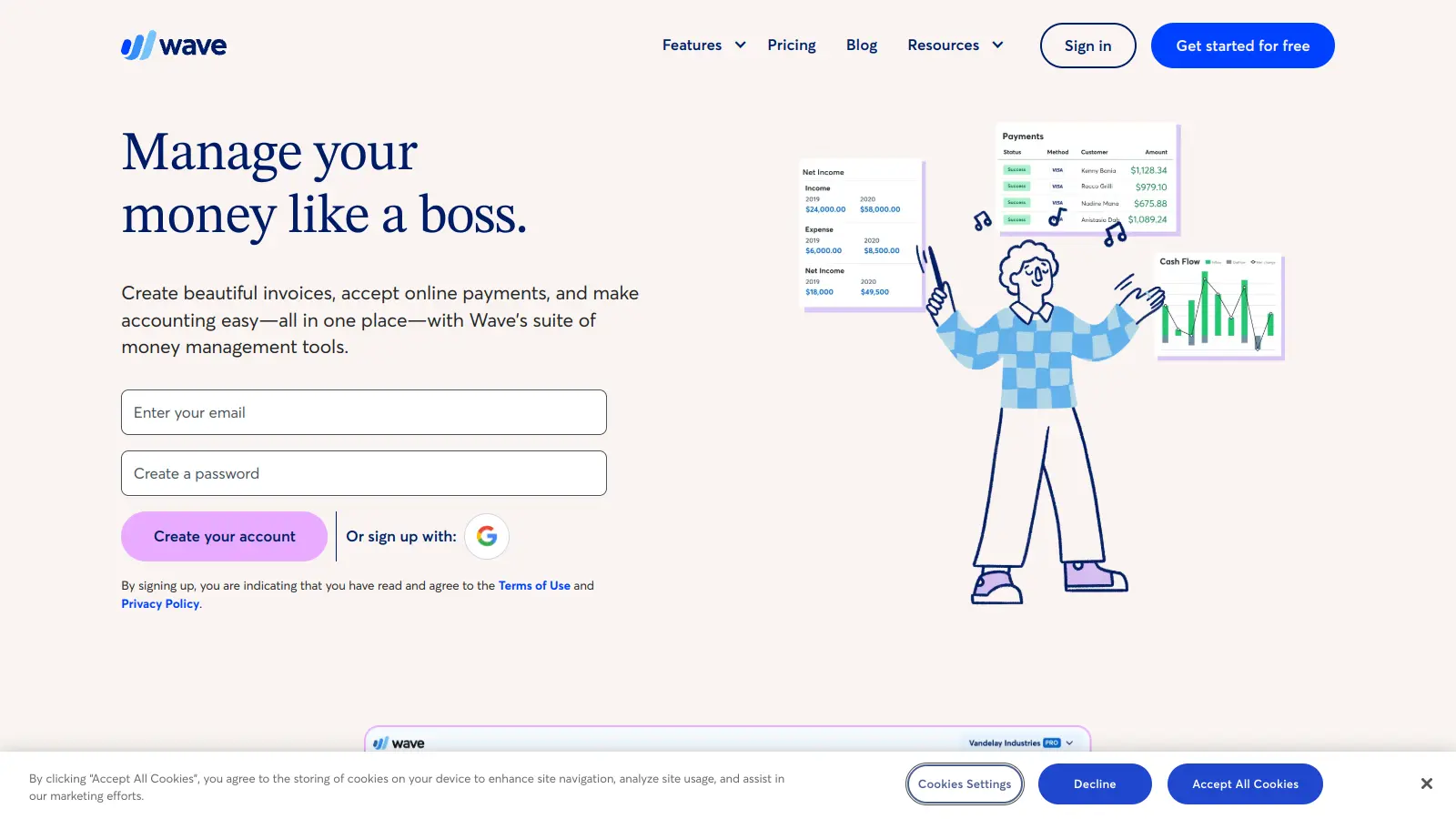
Wave provides free invoicing, receipt scanning, and double-entry accounting with no subscription fee. Contractors can send unlimited invoices, set up recurring billing, and accept payments via credit card or bank transfer (processing fees apply). It's a practical starting point for contractors who don't need progress billing or advanced job tracking and want to avoid monthly software costs.
Pros
✓No monthly subscription for core invoicing features
✓Unlimited invoices and clients on the free plan
✓Double-entry accounting included at no extra cost
Open-source invoicing with a generous free tier and strong customisation.
Freemium
Best for · Tech-comfortable contractors who want flexibility and low costPricing · Free up to 20 clients; from ~$10/mo
Invoice Ninja is an open-source invoicing platform with a free plan covering up to 20 clients and paid plans starting at around $10/month. Contractors get customisable invoice templates, expense tracking, time billing, and a client portal where customers can view and pay invoices online. The self-hosted option appeals to contractors who want full control over their data without a recurring SaaS fee.
Pros
✓Self-hosted option means no ongoing subscription fee
✓Client portal lets customers view all past invoices
✓Supports multiple currencies and tax configurations
Cons
✗Self-hosting requires technical setup and maintenance
✗Mobile app is less polished than FreshBooks or QuickBooks
Field service management with invoicing built around job workflows.
Paid
Best for · Trade contractors managing scheduling and invoicing togetherPricing · From $49/mo
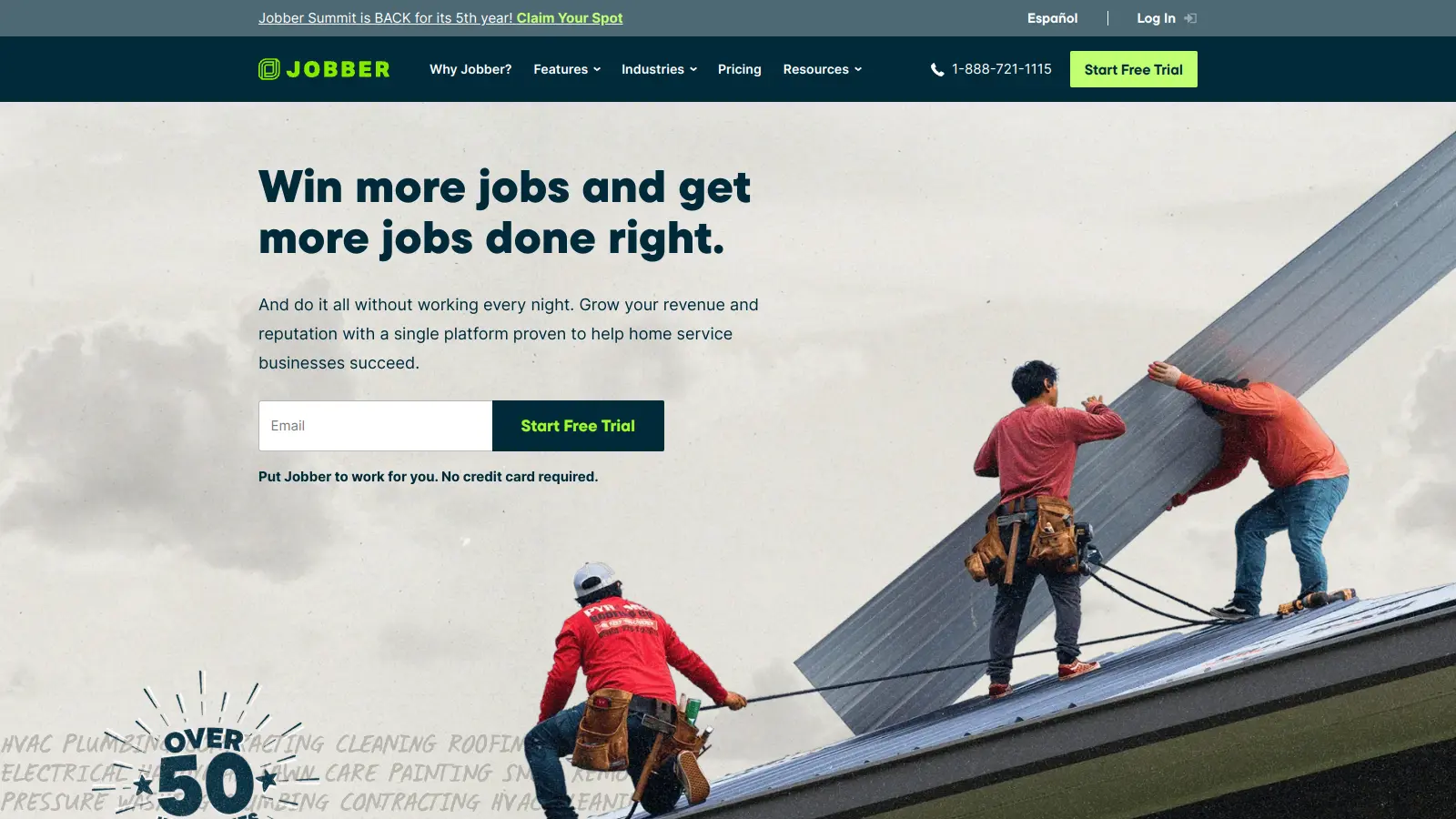
Jobber is built for field service contractors: plumbers, electricians, landscapers, and similar trades. It connects scheduling, quoting, job tracking, and invoicing into one workflow, so an invoice is generated from the completed job record rather than created from scratch. Clients get a self-serve portal to approve quotes and pay invoices. It's more opinionated than a generic invoicing tool, which is a strength if the workflow fits.
Pros
✓Quote-to-invoice workflow reduces admin after each job
✓Client portal for quote approval and payment
✓Strong mobile app for on-site use
Cons
✗More expensive than standalone invoicing tools
✗Overkill for contractors who only need billing, not scheduling
Developer-friendly invoicing with global payment support and no monthly fee.
Paid
Best for · Contractors with international clients or existing Stripe usagePricing · 0.4% per paid invoice (plus payment processing fees)
Stripe Invoicing charges no monthly subscription. You create and send invoices through Stripe's dashboard or API, and pay a small per-invoice fee (0.4% on paid invoices using Stripe Billing) plus standard card processing fees. It supports multiple currencies, automatic tax calculation, and recurring invoices. Contractors working with international clients or those already using Stripe for payments will find it a natural fit.
Pros
✓No monthly fee: pay only per invoice sent
✓Strong multi-currency and international payment support
✓Automatic tax calculation for multiple jurisdictions
Cons
✗No job costing, scheduling, or contractor-specific features
✗Dashboard is less intuitive than dedicated invoicing tools
Full construction accounting and invoicing for established contracting firms.
Custom
Best for · General contractors and construction firms with complex billing needsPricing · Pricing on request
Sage 100 Contractor covers the full financial and project management lifecycle for construction businesses: job costing, progress billing, retainage, change orders, and accounts receivable. Invoices can be tied to contracts, cost codes, and work orders, and dispatched to field technicians via mobile. It integrates with Sage Payment Solutions for card, ACH, and e-check acceptance. This is a serious accounting platform, not a lightweight billing tool.
Pros
✓Progress billing and retainage tracking built in
✓Invoice tied directly to job cost codes and contracts
✓Handles change orders and multiple billing methods
Cons
✗Significant cost and implementation time: not suited for solo contractors
Some contractors bill a flat amount on completion; others need progress billing tied to milestones, time-and-materials invoicing, or retainage handling. Check whether the tool can actually produce the invoice format your clients expect, not just a generic line-item invoice.
Can clients pay directly from the invoice?
Built-in payment links (credit card, ACH, or bank transfer) cut the time between sending an invoice and receiving money. Look at the payment processing fees, not just the subscription cost. Some tools charge 2.9% + 30 cents per card transaction, which adds up on large invoices.
Does it connect to your accounting software?
If you already use QuickBooks, Xero, or a construction accounting platform like Sage 100, pick invoicing software that syncs with it automatically. Manually reconciling invoices against your books wastes time and introduces errors.
How much job cost detail do you need?
A one-person handyman operation needs something simple. A contractor running multiple simultaneous projects with labour, materials, and subcontractors needs job costing: the ability to track what each project costs against what's been billed. Make sure the tool's depth matches your actual workflow.
What does it cost at your invoice volume?
Most tools charge a monthly fee plus optional payment processing fees. Some cap the number of active clients or invoices on cheaper plans. If you send 30 invoices a month to 20 clients, a plan capped at 5 clients will force you into a higher tier immediately.
frequently asked questions
General invoicing tools handle line items, taxes, and payment tracking well. Construction-specific platforms add features like progress billing, retainage, job costing by cost code, and change order management. Most independent contractors and tradespeople don't need construction-specific software; it's mainly relevant for general contractors running multi-phase projects.
Expect to pay between $0 and $60 per month for most tools aimed at small contractors. Free options like Wave cover basic invoicing but charge transaction fees for payments. Mid-tier tools like FreshBooks start around $19-$22/month. Full construction accounting platforms like Sage 100 Contractor are priced on request and are typically reserved for larger operations.
Yes, for simple use cases. Wave is genuinely free for invoicing and works well for contractors who bill a handful of clients on straightforward terms. The main trade-off is that free tools rarely support progress billing, retainage, or deep project tracking. If your billing is complex, a paid tool will save time and reduce errors.
Not necessarily. Many contractors use a dedicated invoicing tool that syncs with separate accounting software. FreshBooks and QuickBooks both offer invoicing plus accounting in one package, which simplifies things. But if you're already comfortable with your accounting setup, a standalone invoicing tool that integrates via API or CSV export may be sufficient.
Sending invoices without clear payment terms is the most common issue. Invoices without a specified due date or late payment policy get paid last. Using software that lets you set Net 30 terms, automatic payment reminders, and late fees by default removes that ambiguity without you having to think about it each time.
tools for humans
toolsforhumans editorial team
Reader ratings and community feedback shape every score. Since 2022, ToolsForHumans has helped 600,000+ people find software that holds up after launch. The picks here come from that.