Best Order Fulfillment Software: Top Picks for Ecommerce Teams (2026)
8 tools reviewedlast reviewed 20 march 2026
Editorial note:this was originally published in september of 2024
Some links on this page are affiliate links. If you sign up via our link we may earn a commission, at no extra cost to you. This doesn't affect which tools we recommend or how we rank them.
Order fulfillment software covers a wide range of problems: syncing inventory across channels, routing orders to the right warehouse, generating shipping labels, and managing returns without a spreadsheet in sight. The right tool depends heavily on whether you self-fulfill, use a 3PL, or run a hybrid setup.
This list covers eight tools built for ecommerce operators, 3PLs, and wholesale teams handling anywhere from a few hundred to tens of thousands of orders per month. Each pick was evaluated on integration depth, pricing transparency, warehouse management capabilities, and how well it fits specific fulfillment models.
You'll find the obvious market leaders here alongside a couple of picks that don't get enough attention but solve real problems for specific use cases.
We collect first-hand reviews from people who use these tools every day — what works, what doesn't, whether it's worth paying for. We research pricing, features, and comparisons so that feedback has real context behind it. For this guide, selection prioritised solutions offering real-time inventory sync, multi-channel shipping integration, and transparent automation capabilities. Read our full research methodology.
help us improve this guide
tell us what you're looking for, what you're using now, and what caught your eye — takes 30 seconds.
What is order fulfillment software?
Order fulfillment software manages the process of receiving an order and getting it into a customer's hands. That includes inventory allocation, picking and packing, shipping label generation, carrier selection, and post-shipment tracking. Some tools also handle returns, reorder alerts, and multi-location routing.
Ecommerce brands use it to avoid oversells, mis-picks, and manual data entry errors. 3PLs use it to manage inventory and orders on behalf of multiple clients. Wholesalers use it to handle bulk orders and purchase order workflows that standard ecommerce platforms don't support well.
The category spans standalone shipping tools, full warehouse management systems (WMS), and 3PL platforms that bundle software with physical fulfillment services. Knowing which type you need is the first step to picking the right one.
Inventory and manufacturing order management for product businesses using QuickBooks or Xero.
Light manufacturers and product businesses needing BOM and work orders
PaidFrom $329/month
our top pick
1
ShipBob
A 3PL and fulfillment software platform built for DTC ecommerce brands.
Custom
Best for · DTC ecommerce brands outsourcing fulfillmentPricing · Pricing on request (per-shipment model)
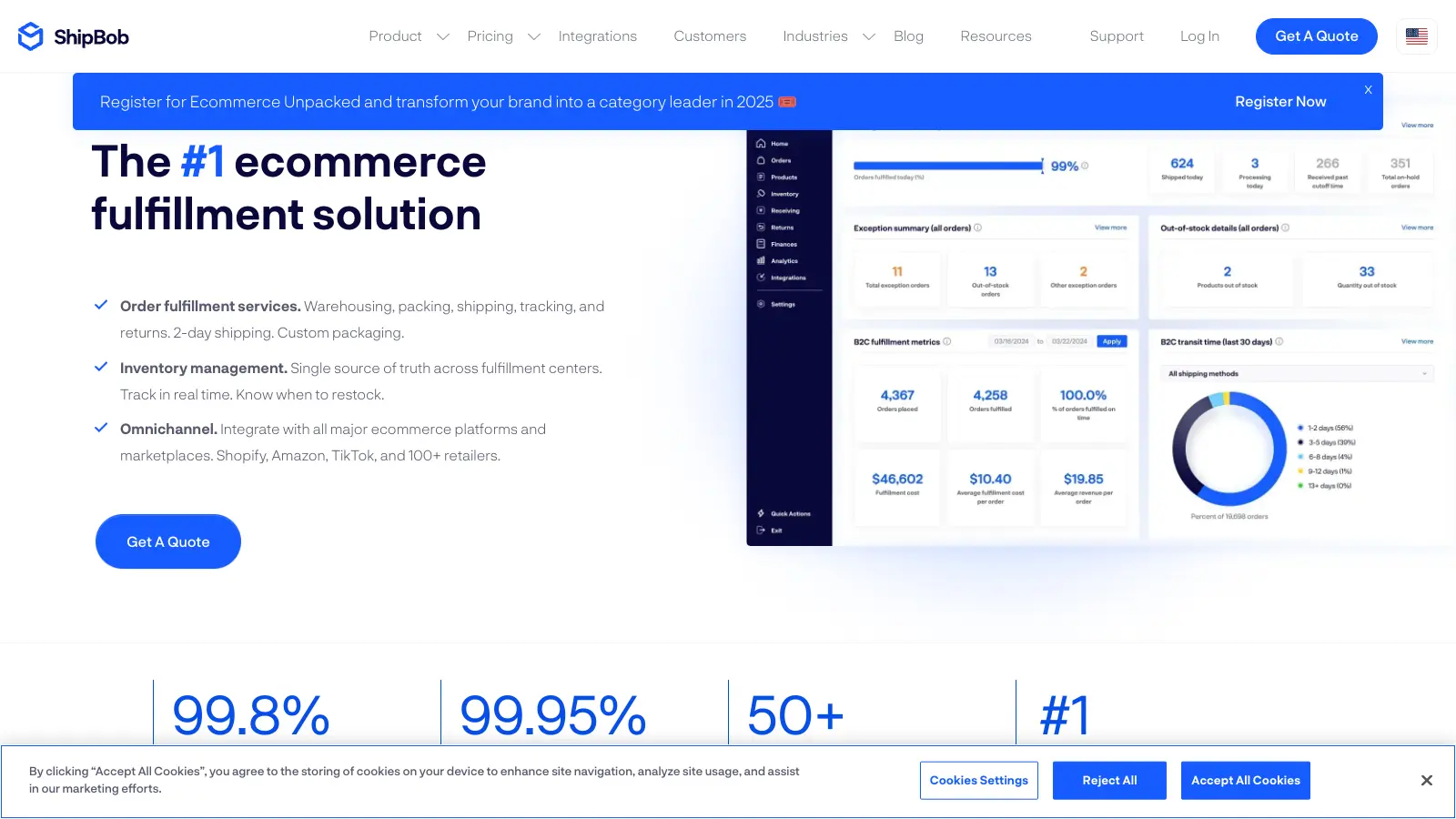
ShipBob combines a physical fulfillment network with cloud-based software, so inventory, order routing, and shipping happen inside one system. It analyzes order patterns to recommend how to split inventory across its fulfillment centers, then automatically routes each order to the nearest location and cheapest carrier. Returns processing is included, and it integrates natively with Shopify, BigCommerce, WooCommerce, and Squarespace.
Pros
✓Distributed inventory cuts average shipping zones
✓Native integrations with all major ecommerce platforms
✓Returns management included in the platform
Cons
✗Only works within ShipBob's own fulfillment network
✗Per-shipment costs can add up fast at high volumes
Multichannel order management for retailers selling across Amazon, eBay, and Shopify.
Paid
Best for · Multichannel retailers with high daily order volumesPricing · From $449/month
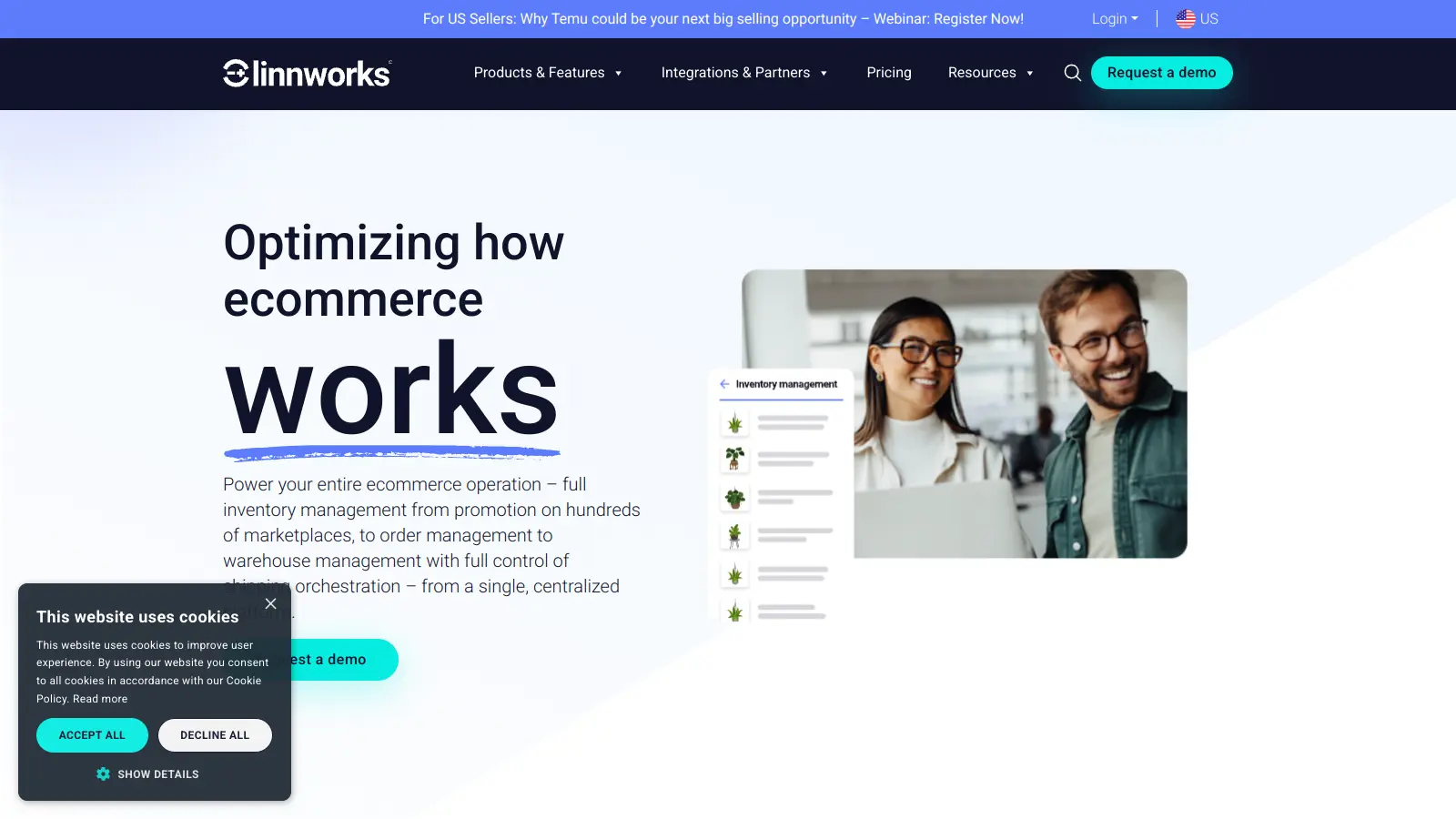
Linnworks syncs inventory and orders across a wide range of sales channels, including Amazon, eBay, Shopify, and Walmart, from a single dashboard. It handles shipping label generation, carrier routing, and warehouse workflows, and connects to 3PLs so you're not locked into a specific fulfillment network. The platform is built for retailers already managing meaningful order volume who need one source of truth across channels.
Pros
✓Connects to 100+ sales channels and marketplaces
✓Flexible 3PL integrations, not tied to one network
✓Strong automation rules for order routing and shipping
Cons
✗Starting price is steep for lower-volume sellers
✗Onboarding complexity requires dedicated setup time
WMS and order management purpose-built for 3PLs and multichannel brands.
Custom
Best for · 3PLs and brands running their own multi-location warehousesPricing · Pricing on request
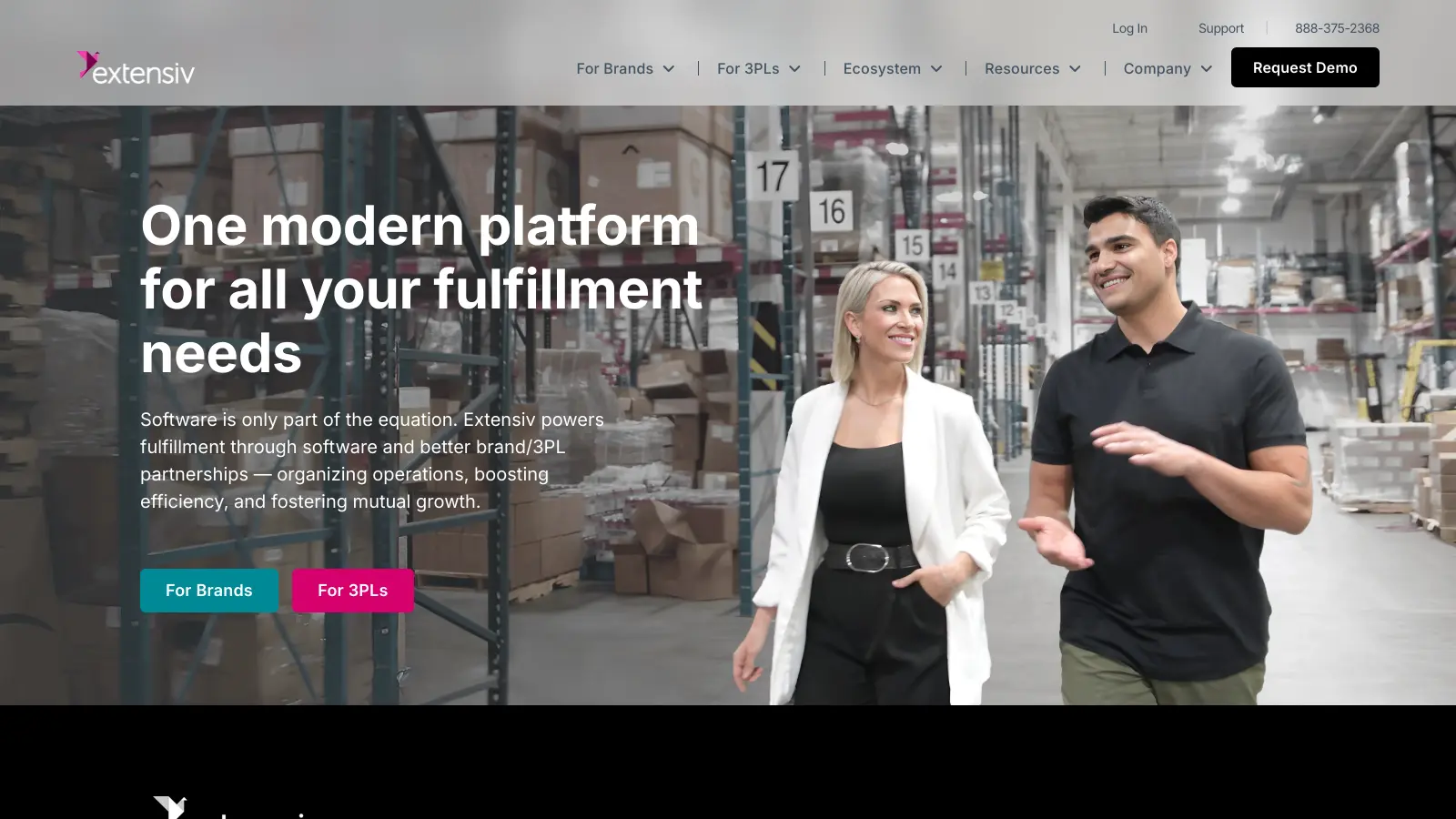
Extensiv targets third-party logistics providers and high-volume brands that need serious warehouse management alongside order orchestration. It covers multi-warehouse inventory visibility, automated purchase order creation, and a native mobile app for warehouse staff. Onboarding is structured for fast deployment, and the platform scales to support new warehouses and clients without a full re-implementation.
Pros
✓Native mobile app for warehouse picking and scanning
✓Multi-warehouse inventory tracked in one dashboard
✓Built-in client management tools for 3PL operators
Cons
✗No public pricing, requires a sales conversation to get numbers
✗Feature depth adds complexity for smaller operations
Cloud WMS for omnichannel brands managing retail, DTC, and wholesale from one system.
Custom
Best for · Omnichannel brands fulfilling across retail and DTC simultaneouslyPricing · Pricing on request
Deposco handles omnichannel fulfillment across DTC, retail, and wholesale channels without requiring separate systems for each. It supports store fulfillment, drop shipping, and traditional warehouse workflows in a single platform, and onboarding is measured in weeks rather than months. The tool is built for brands that have outgrown basic order management but aren't ready for a full enterprise ERP implementation.
Pros
✓Handles retail, DTC, and wholesale in one system
✓Faster onboarding than most enterprise WMS tools
✓Supports store fulfillment and drop shipping natively
Cons
✗No self-serve pricing or trial available
✗Better suited to mid-market and above, light for small brands
Order and inventory management that connects directly to QuickBooks.
Paid
Best for · Wholesalers and manufacturers using QuickBooksPricing · From $10,995/year
Acctivate is designed for product-based businesses already using QuickBooks that need proper inventory and order management without migrating to a new accounting system. It handles purchasing, warehouse management, and order processing while keeping QuickBooks as the financial record. It's particularly useful for wholesale distributors and manufacturers who need lot tracking, serial number tracking, and B2B order workflows that QuickBooks alone can't handle.
Shipping-focused order management with multi-carrier rate shopping for self-fulfilling brands.
Paid
Best for · Self-fulfilling ecommerce brands wanting multi-carrier rate shoppingPricing · From $9.99/month
ShipStation focuses on the shipping side of fulfillment: comparing carrier rates, printing labels in bulk, and syncing tracking back to your store and customers. It connects to over 100 selling channels and carriers, making it useful for brands that self-fulfill and want to cut shipping costs without a full WMS. It's not a warehouse management system and doesn't have deep picking or bin management features, but for brands that just need faster, cheaper shipping, it gets the job done.
Pros
✓Connects to 100+ carriers and 100+ selling channels
✓Batch label printing speeds up daily ship-outs significantly
✓Lowest entry price point of any tool on this list
Cons
✗No real warehouse management features for picking or bin locations
Multichannel order and inventory management with a strong free tier for small sellers.
Freemium
Best for · Small to mid-size ecommerce brands and dropshippersPricing · Free plan available, paid from $59/month
Ordoro covers order management, inventory syncing, shipping, and dropshipping workflows in one tool. Its free plan supports basic shipping for low-volume sellers, while paid tiers unlock multichannel inventory sync, kitting, and vendor portals for dropshipping. It's a practical option for small to mid-size brands that need more than ShipStation's shipping focus but aren't ready for Linnworks-level complexity or pricing.
Pros
✓Genuine free plan available for low-volume sellers
✓Dropshipping vendor portal built into paid tiers
✓Kitting and bundling supported natively
Cons
✗Free plan is limited to a single channel and basic shipping only
✗Reporting is thinner than competing mid-market tools
Inventory and manufacturing order management for product businesses using QuickBooks or Xero.
Paid
Best for · Light manufacturers and product businesses needing BOM and work ordersPricing · From $329/month
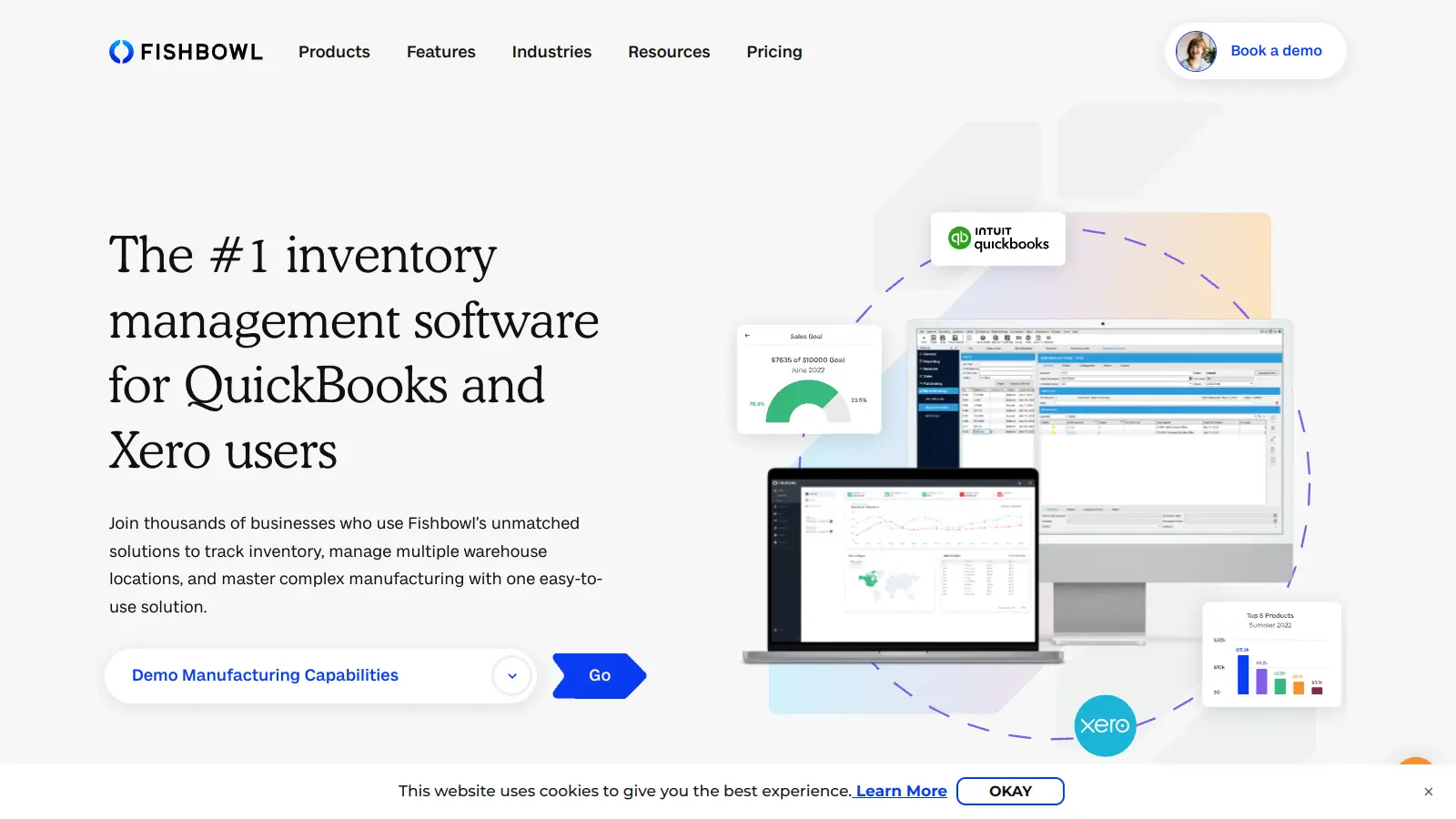
Fishbowl handles inventory control, manufacturing work orders, and order fulfillment for product businesses that need more structure than QuickBooks provides on its own. It supports multi-location inventory, bill of materials, and purchase order management, making it more suitable for light manufacturing and assembly operations than a pure ecommerce tool. It integrates with QuickBooks, Xero, Shopify, and Amazon, covering both the accounting and selling sides without forcing you to replace either.
Pros
✓Bill of materials and work orders for light manufacturing
✓Multi-location inventory tracking included
✓Integrates with QuickBooks and Xero without replacing them
Cons
✗Desktop version still exists and creates version confusion for buyers
✗Not designed for high-volume ecommerce picking workflows
If you run your own warehouse, you need a WMS or order management system with picking, packing, and label generation built in. If you use a 3PL, you need software that connects to their systems or a platform that bundles software with its own fulfillment network, like ShipBob. Hybrid setups need tools that can route orders intelligently across both.
Channel and platform integrations
Check which ecommerce platforms and marketplaces the tool connects to natively. Shopify, Amazon, eBay, and Walmart are table stakes. If you sell on less common channels or use a headless storefront, confirm integration availability before committing. ERP and accounting integrations matter too if you're at any meaningful scale.
Order volume and pricing structure
Some tools price by order volume, others by features or user seats. At low volumes, per-order pricing can be cheap; at high volumes, flat monthly fees win. Tools like Linnworks start from $449/month regardless of order count, which only makes sense above a certain threshold. Get a cost-per-order estimate at your current and projected volume.
Multi-location and multi-warehouse support
If you have more than one fulfillment location, or plan to, confirm the tool can route orders to the nearest or most cost-effective facility. Not every tool handles this well. Some charge extra for additional warehouses or locations.
Returns management
Returns processing is often an afterthought in fulfillment software, but for consumer brands with return rates above 10-15%, it matters. Check whether returns are handled natively, require an add-on, or need a separate tool entirely. This affects both cost and the customer experience at a critical touchpoint.
frequently asked questions
A warehouse management system (WMS) focuses specifically on what happens inside a warehouse: pick paths, bin locations, barcode scanning, and labor management. Order fulfillment software is broader and typically includes order intake, channel sync, and shipping in addition to warehouse operations. Many tools in this category combine both, but the emphasis varies.
Pricing ranges from free tiers on basic shipping tools to $449/month and up for multichannel platforms like Linnworks. 3PL-bundled solutions like ShipBob charge per shipment rather than a flat SaaS fee, so costs scale directly with order volume. Enterprise WMS tools from vendors like Extensiv are typically quote-based. Expect to pay $100-500/month for a mid-market SaaS tool, or negotiate custom pricing for high-volume operations.
Shopify's native order management covers the basics for single-channel, self-fulfilled brands. Once you add a second sales channel, a second warehouse, or a 3PL, Shopify's tools start to show gaps: no intelligent routing, limited picking workflows, and no multi-warehouse inventory visibility. That's when a dedicated fulfillment tool earns its cost.
Buying for current volume rather than projected growth. A tool that works at 200 orders/month may become a bottleneck at 2,000. Check how the tool scales: does it support multiple warehouses, batch picking, and carrier rate shopping at higher volumes, or do those features cost extra or require an upgrade to a different tier entirely?
It depends on the 3PL and the software. Many 3PLs have preferred tech partners or proprietary systems they require you to use. Before purchasing standalone fulfillment software, confirm whether your 3PL has a native integration or supports EDI/API connections. ShipBob, for example, only works with its own fulfillment network, while tools like Linnworks and Extensiv connect to a wide range of 3PL partners.
tools for humans
toolsforhumans editorial team
Reader ratings and community feedback shape every score. Since 2022, ToolsForHumans has helped 600,000+ people find software that holds up after launch. The picks here come from that.