Best CRM Software for Manufacturing: 8 Picks for 2026
8 tools reviewedlast reviewed 20 march 2026
Editorial note:this was originally published in august of 2024
Some links on this page are affiliate links. If you sign up via our link we may earn a commission, at no extra cost to you. This doesn't affect which tools we recommend or how we rank them.
Manufacturing sales cycles are long, deals involve multiple stakeholders, and your CRM needs to talk to your ERP, MRP, or inventory system, not just your inbox. A generic CRM built for SaaS teams won't cut it when you're managing distributor relationships, territory-based sales reps, and demand forecasting.
This list covers 8 CRMs that are actually used by manufacturers, from enterprise platforms like Salesforce and Microsoft Dynamics 365 to leaner options for mid-market and growing teams. Each pick is assessed on pipeline management, ERP integration capability, automation depth, and pricing transparency.
Whether you're a discrete manufacturer with a complex quoting process or a process manufacturer managing long-term contracts, there's a fit here.
We collect first-hand reviews from people who use these tools every day — what works, what doesn't, whether it's worth paying for. We research pricing, features, and comparisons so that feedback has real context behind it. For this guide, manufacturing CRMs were selected based on integration capabilities with ERP systems, inventory tracking features, and industry-specific compliance support. Read our full research methodology.
help us improve this guide
tell us what you're looking for, what you're using now, and what caught your eye — takes 30 seconds.
What is manufacturing CRM software?
A manufacturing CRM is a customer relationship management platform configured for the specific workflows of manufacturing businesses: long B2B sales cycles, territory-based sales teams, distributor and channel partner management, and integration with production and inventory systems like ERP, MRP, and MES.
Unlike general-purpose CRMs, manufacturing-focused platforms prioritise account management for high-value clients, demand forecasting tied to sales pipelines, quoting workflows, and visibility into order status. They serve sales, marketing, and customer service teams who need to see both commercial and operational data in one place.
Common users include sales managers at discrete and process manufacturers, customer service teams handling large accounts, and operations leaders who need sales data to inform production planning.
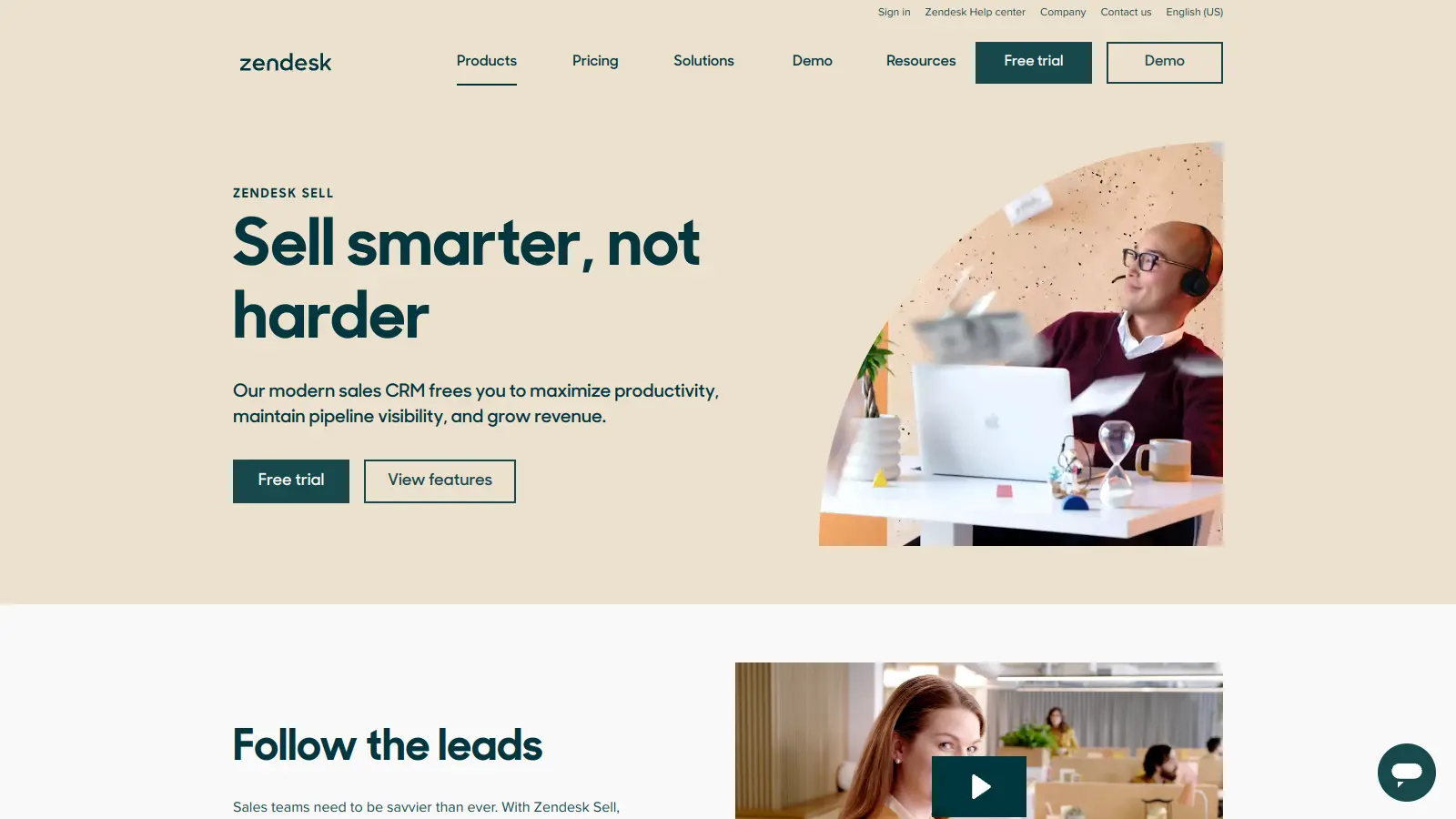
Sales CRM that connects directly to Zendesk's customer service tools.
Manufacturers where post-sale service is tightly linked to sales retention
PaidFrom $19/user/mo
our top pick
1
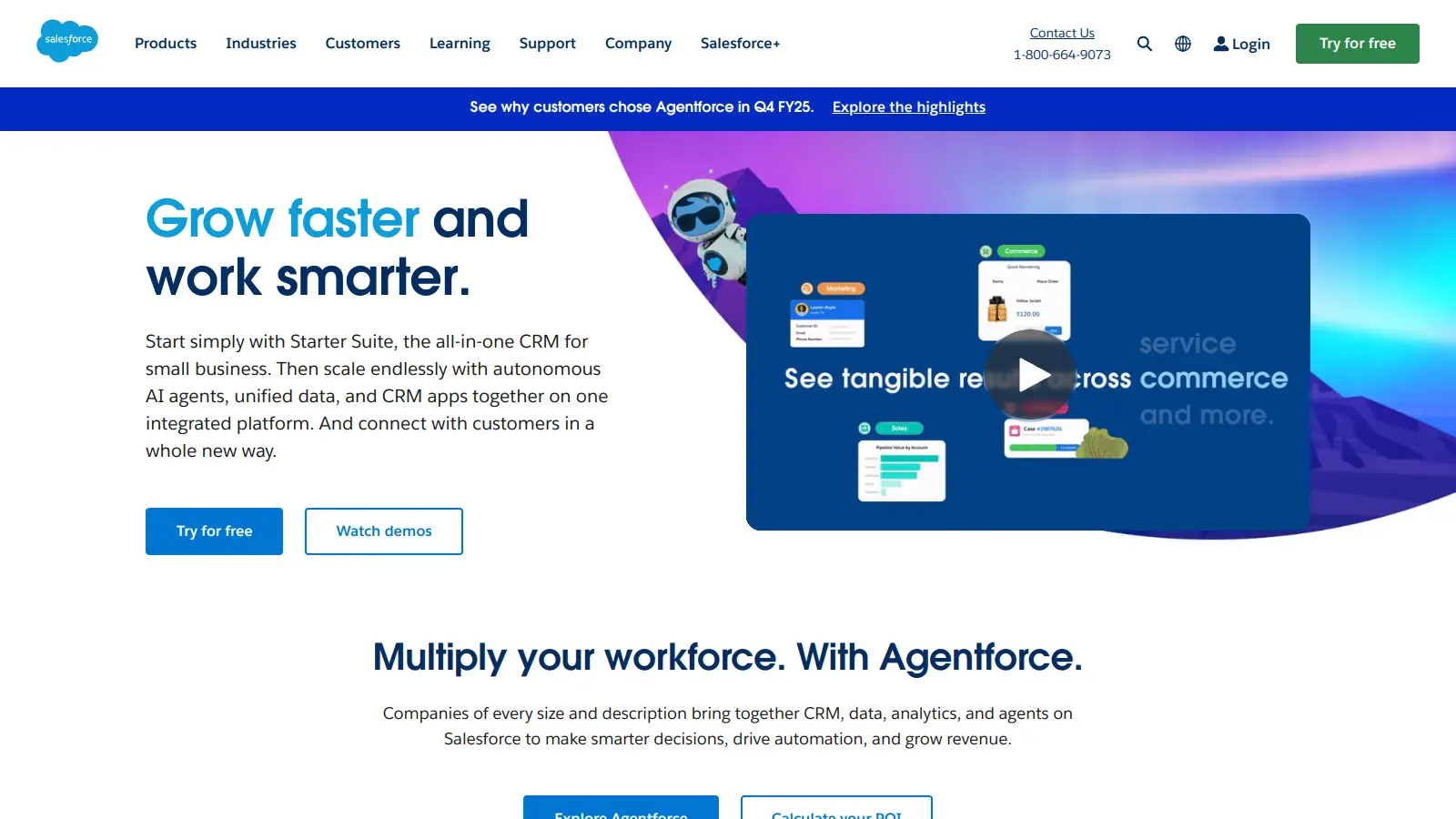
Salesforce Manufacturing Cloud
Enterprise CRM built around manufacturing sales cycles and forecasting.
Custom
Best for · Mid-to-large manufacturers with complex sales and service operationsPricing · Pricing on request
Salesforce Manufacturing Cloud runs on Sales Cloud and Service Cloud, adding manufacturing-specific features like run-rate agreement tracking, account-based forecasting, and demand visibility that connects sales data to production planning. The Agentforce layer adds AI-driven automation for sales workflows, service case routing, and supply chain alerts. It connects natively with ERP, MRP, MES, and SCM platforms via MuleSoft or pre-built connectors.
Pros
✓Native run-rate agreement and forecasting tools
✓Deep ERP/MRP integration via MuleSoft
✓AI automation across sales and service workflows
Cons
✗High implementation cost, typically requires a partner
✗Steep learning curve for non-technical sales teams
CRM for manufacturers already running on the Microsoft stack.
Paid
Best for · Manufacturers already using Microsoft 365 or Dynamics 365 ERPPricing · From $65/user/mo
Dynamics 365 Sales is Microsoft's CRM for managing sales pipelines, accounts, and customer service, with native integration to Outlook, Teams, Power BI, and Dynamics 365 Business Central for ERP. For manufacturers on the Microsoft ecosystem, the unified data layer between CRM, ERP, and productivity tools reduces integration overhead significantly. It also includes AI-powered forecasting and territory management.
Pros
✓Native integration with Outlook, Teams, and Dynamics ERP
✓Power BI dashboards built in for reporting
✓Strong territory and account hierarchy management
All-in-one CRM that scales from a free tier to enterprise manufacturing use.
Freemium
Best for · Growing manufacturers wanting one platform for sales, marketing, and servicePricing · Free plan available; paid plans from $15/user/mo
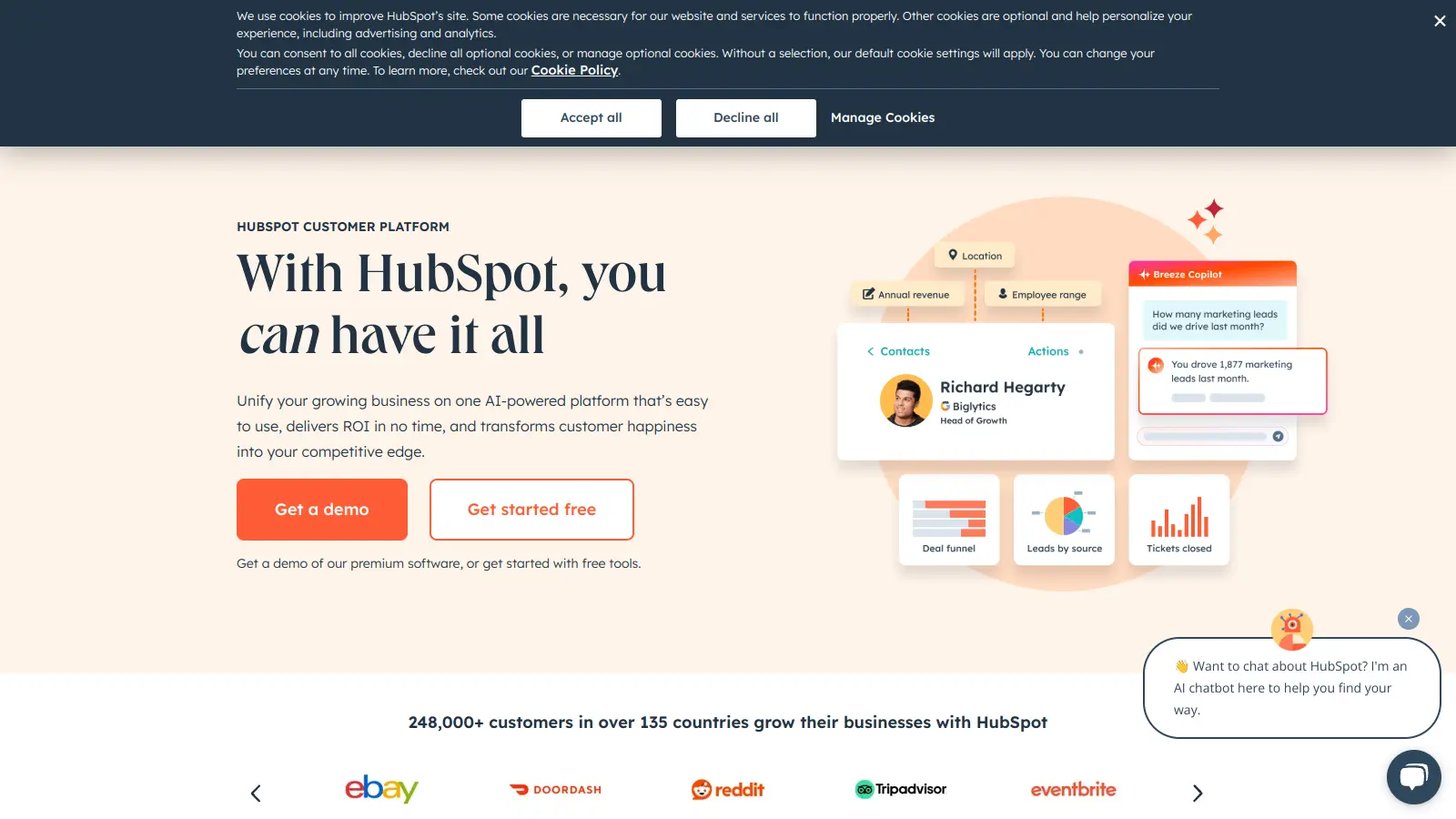
HubSpot's CRM covers sales pipeline, marketing automation, customer service, and operations in one platform, with AI-driven demand forecasting that pulls from historical sales and live pipeline data. For manufacturers, it handles multi-step deal workflows, territory segmentation, and distributor communication via integrated email sequences and Slack notifications. It connects to MPS and MRP systems through its Operations Hub.
Pros
✓Free tier is genuinely functional for small sales teams
✓Sales, marketing, and service in one subscription
✓AI forecasting available on mid-tier plans
Cons
✗Advanced manufacturing features require higher-tier plans
Visual pipeline CRM built for sales teams with straightforward deal flows.
Paid
Best for · Small to mid-sized manufacturers with sales-first teamsPricing · From $14/user/mo
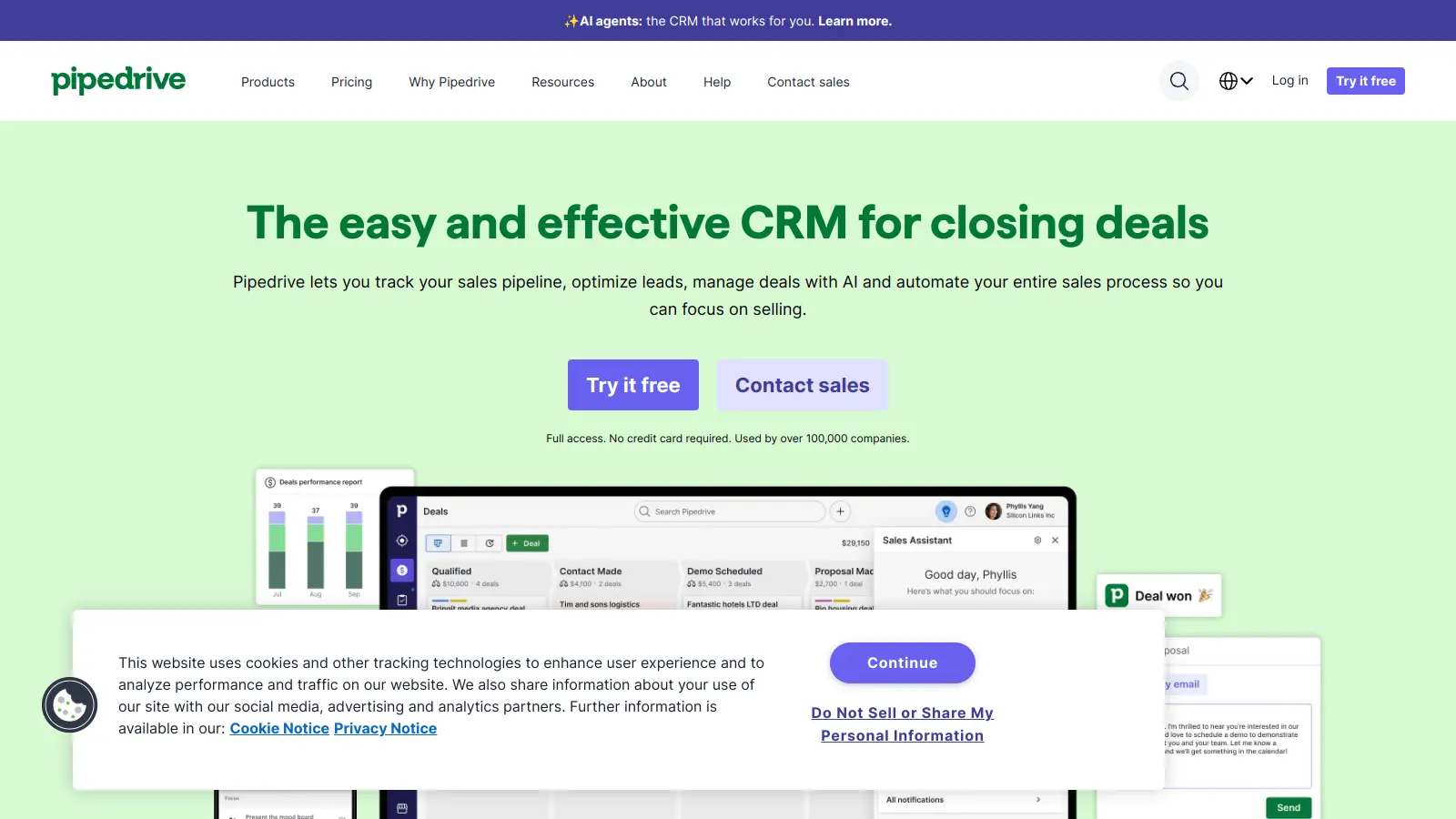
Pipedrive centres on a drag-and-drop visual pipeline that gives sales reps a clear view of every deal's status, expected close date, and next action. For manufacturers with territory-based teams, it handles lead routing, activity scheduling, and email automation without requiring an IT department to configure it. Customisable dashboards make it practical for tracking order statuses and distributor conversations.
Affordable, configurable CRM with solid automation at a low per-user cost.
Freemium
Best for · Budget-conscious manufacturers or smaller teamsPricing · Free for up to 3 users; paid plans from $14/user/mo
Zoho CRM gives manufacturers a configurable pipeline, territory management, and workflow automation at one of the lowest per-user prices in the market. Its AI assistant Zia handles lead scoring and basic forecasting. Zoho also integrates with its own ERP-adjacent tools like Zoho Inventory and Zoho Books, which reduces integration costs for manufacturers not already committed to SAP or Oracle.
Pros
✓Low per-user cost with solid automation on paid tiers
✓Native integration with Zoho Inventory and Zoho Books
✓AI-assisted lead scoring included in paid plans
Cons
✗UI feels dated compared to HubSpot or Salesforce
✗Third-party ERP integrations require additional setup work
CRM that shares a database with NetSuite ERP for true operational visibility.
Custom
Best for · Manufacturers already running NetSuite ERPPricing · Pricing on request
NetSuite CRM shares a single data layer with NetSuite's ERP, so sales reps see real-time inventory, order status, and customer financials without any integration setup. For manufacturers already on NetSuite ERP, adding CRM is a natural extension rather than a new deployment. It covers sales force automation, partner relationship management for distributor networks, and marketing campaign tracking.
Pros
✓Real-time ERP and CRM data in one system, no connector needed
✓Partner and distributor portal built in
✓Strong order and financial visibility for sales teams
Cons
✗Only practical if you're already a NetSuite ERP customer
✗Pricing is opaque and typically high for smaller manufacturers
No-code configurable CRM with deep process automation for manufacturers.
Paid
Best for · Manufacturers with complex, multi-channel sales processesPricing · From $25/user/mo
Creatio CRM is built around a no-code process automation engine, letting manufacturers configure deal workflows, service escalation rules, and marketing journeys without developer involvement. It handles B2B and B2C sales processes in one platform, which suits manufacturers selling both direct and through distributor channels. Its AI tools cover predictive lead scoring and next-best-action recommendations.
Pros
✓No-code workflow builder reduces IT dependency
✓Handles B2B and B2C pipelines simultaneously
✓AI scoring and forecasting included in core platform
Cons
✗Less name recognition means fewer third-party resources and community support
✗ERP integration requires configuration work on most non-native connectors
Sales CRM that connects directly to Zendesk's customer service tools.
Paid
Best for · Manufacturers where post-sale service is tightly linked to sales retentionPricing · From $19/user/mo
Zendesk Sell is a sales pipeline CRM designed to work alongside Zendesk Support, making it a practical choice for manufacturers where after-sale service and technical support are central to customer retention. Sales reps get visibility into open support tickets during deal management, and service teams can see account history from the sales side. It includes email tracking, call logging, and pipeline reporting.
Pros
✓Tight integration with Zendesk Support for service visibility
✓Clean, fast UI with minimal onboarding friction
✓Built-in call and email tracking on all paid plans
Cons
✗Limited manufacturing-specific features compared to Salesforce or Dynamics
The most important question is whether the CRM can connect to your existing systems. A CRM that syncs order status, inventory levels, and production schedules from your ERP gives sales reps real-time data. Check whether the integration is native, API-based, or requires a third-party connector, as this affects cost and reliability.
Sales pipeline fit for long cycles
Manufacturing deals often take months and involve multiple contacts at each account. Your CRM needs multi-stakeholder deal tracking, customisable pipeline stages, and quote management, not just basic contact logging. Evaluate how each platform handles deal complexity and whether quoting tools are built in or bolt-on.
Territory and account management
If you sell through distributors or run regional sales teams, territory assignment and account hierarchies matter. Look for tools that can segment accounts by geography, product line, or channel, and assign leads and tasks accordingly.
Automation capabilities
Manual data entry kills productivity for sales teams already stretched across long deal cycles. Prioritise platforms with workflow automation for follow-ups, lead routing, and service ticket escalation. AI-assisted forecasting is increasingly common and worth evaluating if demand planning is a pain point.
Total cost of ownership
Sticker price per user rarely reflects what manufacturers actually pay. Factor in implementation costs, the price of add-on modules (marketing, service, analytics), and the cost of ongoing support or a partner relationship. Enterprise platforms like Salesforce and Dynamics 365 typically require a certified implementation partner, which adds to the total investment.
frequently asked questions
A general CRM tracks contacts, deals, and emails. A manufacturing CRM adds capabilities specific to the industry: account hierarchies for distributor networks, integration with ERP and MRP systems, demand forecasting tied to the sales pipeline, and quoting workflows for complex orders. Some general CRMs can be configured to handle these needs, but purpose-built manufacturing modules like Salesforce Manufacturing Cloud or NetSuite CRM reduce the configuration work significantly.
Per-user pricing for CRM software ranges from around $14/month (Zoho CRM) to $165/month or more per user for enterprise tiers of Salesforce or Dynamics 365. However, per-user pricing is only part of the story for manufacturers. Implementation, data migration, ERP integration, and ongoing partner support can bring the total first-year cost of an enterprise CRM to $25,000 or well above, depending on complexity and customisation requirements.
HubSpot's free tier is genuinely usable for small teams tracking contacts and basic deal pipelines, but free plans almost always lack the automation, forecasting, and integration capabilities manufacturers need at scale. Most mid-market manufacturers end up on a paid plan within the first year. Free plans are most useful for testing whether a platform fits your sales process before committing.
Most leading manufacturing CRMs have documented integrations with major ERP platforms like SAP, Oracle, Microsoft Dynamics 365 Business Central, and NetSuite. The quality and depth of these integrations vary. Native integrations (same vendor) tend to be more reliable. Third-party connectors via tools like MuleSoft or Boomi work well but add cost and a dependency to manage. Always verify integration specifics with the vendor before purchasing.
Buying on features without evaluating implementation complexity. Many manufacturers select an enterprise platform, then discover the implementation takes 6-12 months and requires a specialist partner. A mid-market manufacturer with a 10-person sales team often gets better outcomes from a faster-to-deploy tool like HubSpot or Pipedrive than from an over-engineered Salesforce deployment. Match the platform to your team's capacity to adopt it, not just your wishlist of features.
tools for humans
toolsforhumans editorial team
Reader ratings and community feedback shape every score. Since 2022, ToolsForHumans has helped 600,000+ people find software that holds up after launch. The picks here come from that.