Whatfix reviews — what users really think

last reviewed 24 march 2026
how we review

We start with direct ratings from our readers, then look at what real users are saying in practitioner forums and community spaces. We pair that with search demand data and profession-level persona analysis.

full methodology →

Editorial note: this was originally published in august of 2024

quick take

  • Best for: enterprise software rollouts with 200+ users and dedicated IT ownership
  • Skip if: you're a small team, need transparent pricing, or lack implementation resources
  • £Best value: only makes sense on a custom enterprise contract with a scoped implementation plan
½3.5/ 5 — editorial rating

based on real user feedback, community sentiment, pricing value, and fit for target audience. see our full methodology

used Whatfix? we'd love to know your thoughts

reader ratings shape our score

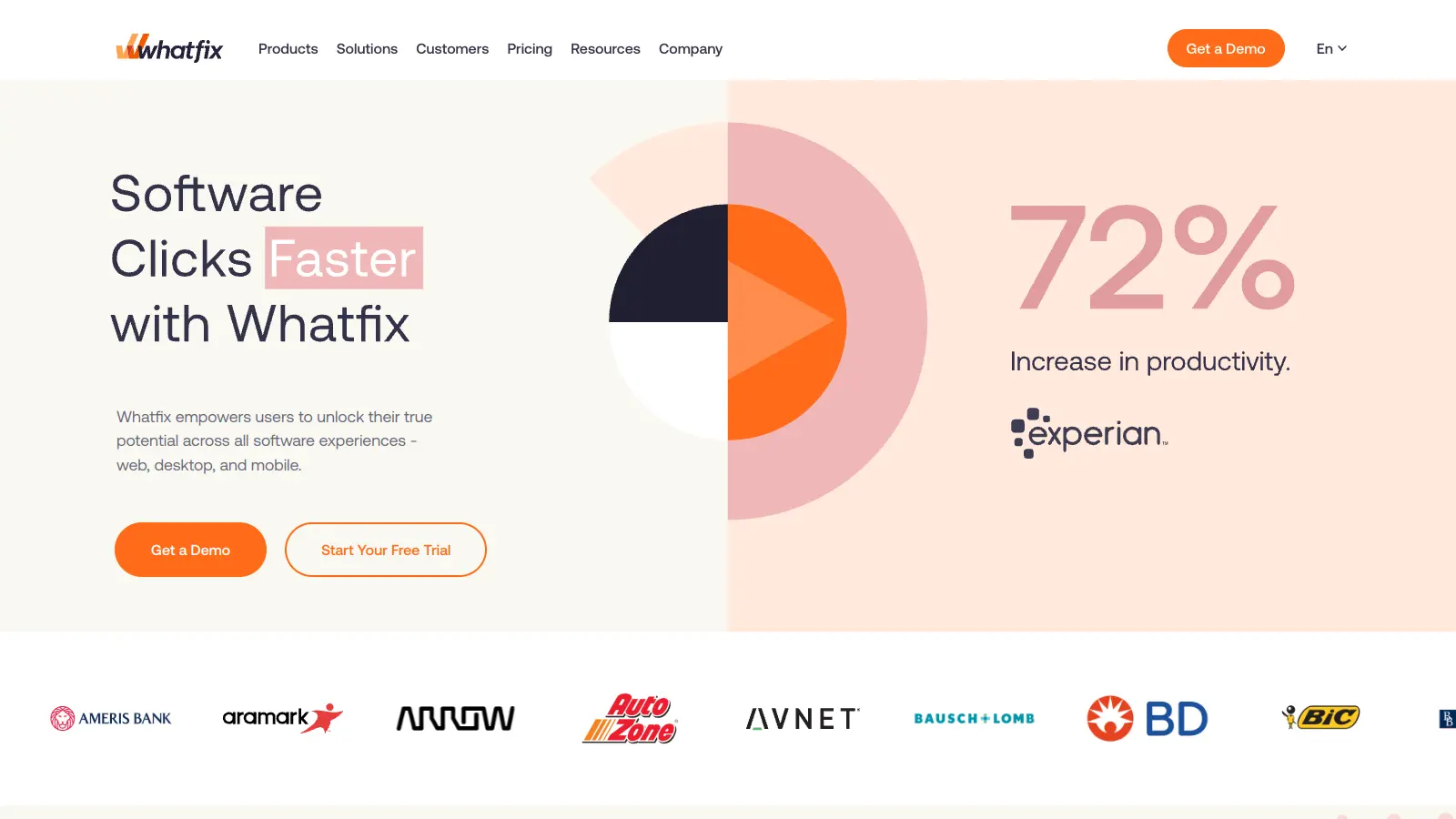
Whatfix is an AI-powered digital adoption platform that helps organizations make the most of their software applications. It guides users through complex software with interactive walkthroughs, tips, and real-time support, all without leaving the application they're using.

The platform uses ScreenSense, its proprietary AI technology, to interpret user context and real-time intent within applications. It delivers contextual guidance through flows, smart tips, pop-ups, and AI-generated answers. The Self-Help Widget aggregates content from repositories like Confluence and SharePoint, offering searchable, AI-powered assistance directly in-app.

Organizations can track user progress through built-in analytics tools. User Journey Analytics creates Sankey charts that visualize engagement patterns and identify where users drop off. The platform works across web, desktop, and mobile applications, integrating with many common business tools.

Whatfix offers a free trial but doesn't maintain a permanent free tier. Paid plans are customized based on specific business needs, with typical starting costs ranging from $1,200 to $2,000 per month. The platform maintains high security standards with ISO 27001:2013 and SOC 2 certifications.

how popular is Whatfix?

monthly search interest

2.4k/mo now

01.6k3.3k5k2023202420252026
peak interest4k/moSep 2024
searches now2k/moFeb 2026
1-month change— steadyvs prev month

Whatfix search interest has been broadly stable since 2022, oscillating in a narrow band with no sustained growth. The September 2024 spike to 4,400 looks like a one-off moment rather than a turning point, since volume dropped back to its historical range immediately after. This is a mature tool with a fixed audience: it's not growing, but it's not declining either. For a buyer, that means you're evaluating a settled product with a real customer base, not a hype-cycle tool, but don't expect a rapidly evolving feature set driven by competitive pressure from below.

who is Whatfix for?

Whether Whatfix earns its price depends almost entirely on your organization's size, software stack, and how much internal resource you can commit to running it. Pick your role below to see the honest breakdown.

overall sentiment

select your role to see what people like you are saying

IT Manager

positive

If you're managing a large rollout of Salesforce, Workday, SAP, or similar, Whatfix genuinely reduces friction and gives you adoption analytics that help you spot where users are getting stuck. The integration story is solid. The caveats: pricing starts at roughly $1,200/month on a custom contract, advanced configuration takes real technical effort, and large deployments have a track record of performance hiccups. You'll need to own this tool, not just deploy it.

strengths

  • Reduces software rollout friction and user resistance
  • Comprehensive analytics for tracking adoption gaps and user behavior
  • Strong integration capabilities with existing enterprise applications
  • Decreases support ticket volume and associated helpdesk costs

concerns

  • High pricing makes ROI difficult to justify for smaller organizations
  • Steep learning curve for advanced features requires technical expertise
  • Performance issues reported during large-scale deployments
  • Implementation complexity demands significant IT resources

what users are saying

At an estimated $1,200 to $2,000 per month on a custom contract, Whatfix only makes financial sense at scale, and going in under-resourced is the most common reason implementations stall.

Community sources for Whatfix are thin at the public-facing level, which is typical for a mid-market enterprise tool that sells primarily through sales calls rather than self-serve signups. What does surface on commercial review platforms is broadly positive on ease of use and onboarding flow creation, with users citing specific wins around reducing repetitive training sessions and getting new hires productive faster. The recurring criticisms are pricing opacity and implementation weight: at an estimated $1,200 to $2,000 per month, buyers report that the sales process is long, the contract is enterprise-style, and smaller teams often find they've bought more than they can actually operationalize. Performance issues during large-scale deployments come up more than once, and content maintenance, specifically keeping walkthroughs in sync as underlying applications update, is a consistent frustration.

Our take: Whatfix is a genuinely capable digital adoption platform that earns its price for large organizations rolling out complex enterprise software like Salesforce, Workday, or SAP. But the lack of public pricing, the custom quote model, and the implementation overhead mean you shouldn't shortlist it if you have fewer than a few hundred software users or no dedicated IT resource to own the rollout. If you're evaluating Whatfix, also look hard at WalkMe, which targets a similar buyer and competes directly. For smaller teams or simpler use cases, Userpilot or Pendo offer lighter-weight in-app guidance at a fraction of the cost. Don't commit until you've scoped the implementation timeline honestly, because the tool's value is largely contingent on getting your walkthroughs built and maintained.

features

  • AI Agents and ScreenSense: Proprietary AI technology that interprets user context and real-time intent to deliver relevant actions through AI Agents for authoring, insights, and in-app guidance.
  • Flows and Smart Tips: Step-by-step guided walkthroughs that branch users into different pathways, with context-specific tooltips triggered by user actions for personalized training.
  • Self-Help Widget: Searchable, AI-powered help that aggregates content from repositories like Confluence and SharePoint, delivering on-demand assistance without leaving the application.
  • User Journey Analytics: Sankey charts that visualize engagement patterns, identify drop-off points, and track user behavior to measure feature engagement and adoption gaps.
  • Data Entry Automation: Pre-populate form fields with values to automate repetitive tasks and reduce manual data entry across multiple platforms.
  • Task Lists and QuickRead: Assign training tasks or topics for users to complete, with AI summarization of answers to user search queries for faster learning.
  • Segmentation and Chatbot Integration: Display relevant content based on user location or page, and deliver Whatfix content through popular chatbot services for multi-channel support.

pricing

  • Free Trial: Available for organizations to test the platform before committing to a paid plan.
  • Custom Pricing: Requires direct contact with Whatfix sales team for personalized quote based on organizational needs.
  • Estimated Monthly Range: Approximately $1,200 to $2,000 per month, though not officially confirmed by Whatfix.
  • Enterprise Pricing: Tailored solutions with flexible pricing for large organizations, including AI-powered features and analytics.

frequently asked questions

At an estimated $1,200 to $2,000 per month on a custom contract, Whatfix only makes financial sense at scale. If you're rolling out a major enterprise application to hundreds of employees and can attribute ticket-volume reduction and onboarding time savings in measurable terms, the ROI case holds up. For organizations under 200 users or without a dedicated L&D or IT resource to own the platform, the price is hard to justify. There's no self-serve tier, so you're committing to a sales process before you even know what you'll pay.

IT Managers handling large software rollouts and Training and Development Managers who need to replace or reduce live training sessions get the most out of it. Support Team Leaders looking to cut help desk ticket volume are a strong fit too, particularly at organizations where users are repeatedly asking the same procedural questions about the same applications. It's less suited to teams doing anything simple or low-stakes.

Two stand out. First, content maintenance: every time the application you've built guidance for updates its UI, your walkthroughs need updating too. This is an ongoing operational cost that buyers often underestimate. Second, implementation is not lightweight. Getting Whatfix properly deployed, integrated, and populated with useful content takes real IT and L&D effort. The platform can do a lot, but it doesn't do it for you.

Both are enterprise-grade digital adoption platforms and both use a custom pricing, sales-led model. WalkMe has been around longer and has deeper penetration in very large enterprises, with a correspondingly larger services ecosystem. Whatfix is generally considered faster to implement and has a more intuitive authoring interface, which matters if your L&D team needs to create content without heavy IT involvement. If you're at a Fortune 500 company with an established WalkMe vendor relationship, there's no strong reason to switch. If you're evaluating both fresh, Whatfix is the better starting point for mid-market organizations.

Honestly, this is where it gets difficult. The authoring interface for basic flows is reasonably accessible, but complex implementations, integrations, and ongoing content maintenance will strain a team without a technical owner. Whatfix's onboarding support is well-regarded, but once you're live, the day-to-day upkeep falls on you. If you're a Training and Development Manager trying to run this without IT support, budget for either a longer ramp-up or professional services time. Going in under-resourced is the most common reason implementations stall.

tools for
humans

toolsforhumans editorial team

Reader ratings and community feedback shape every score. Since 2022, ToolsForHumans has helped 600,000+ people find software that holds up after launch. how we research →

other tools to check out

Microsoft CoPilot screenshot
online buzz1M
trend (1M)22%
3.5based on real user feedback, community sentiment, pricing value, and fit for target audience. see our full methodology

Microsoft CoPilot

Microsoft Copilot is an AI-powered assistant that provides real-time help across Microsoft apps and platforms. It uses advanced language models to automate tasks, generate content, analyze data, and provide suggestions while integrating with Microsoft 365 applications like Word, Excel, Teams, and Outlook.

best deal

Try Microsoft Copilot Chat free with your eligible Microsoft 365 subscription, or get Copilot Business at $18/month promotional pricing for small businesses.

Quickbooks screenshot
online buzz1M
trend (1M)18%
3.5based on real user feedback, community sentiment, pricing value, and fit for target audience. see our full methodology

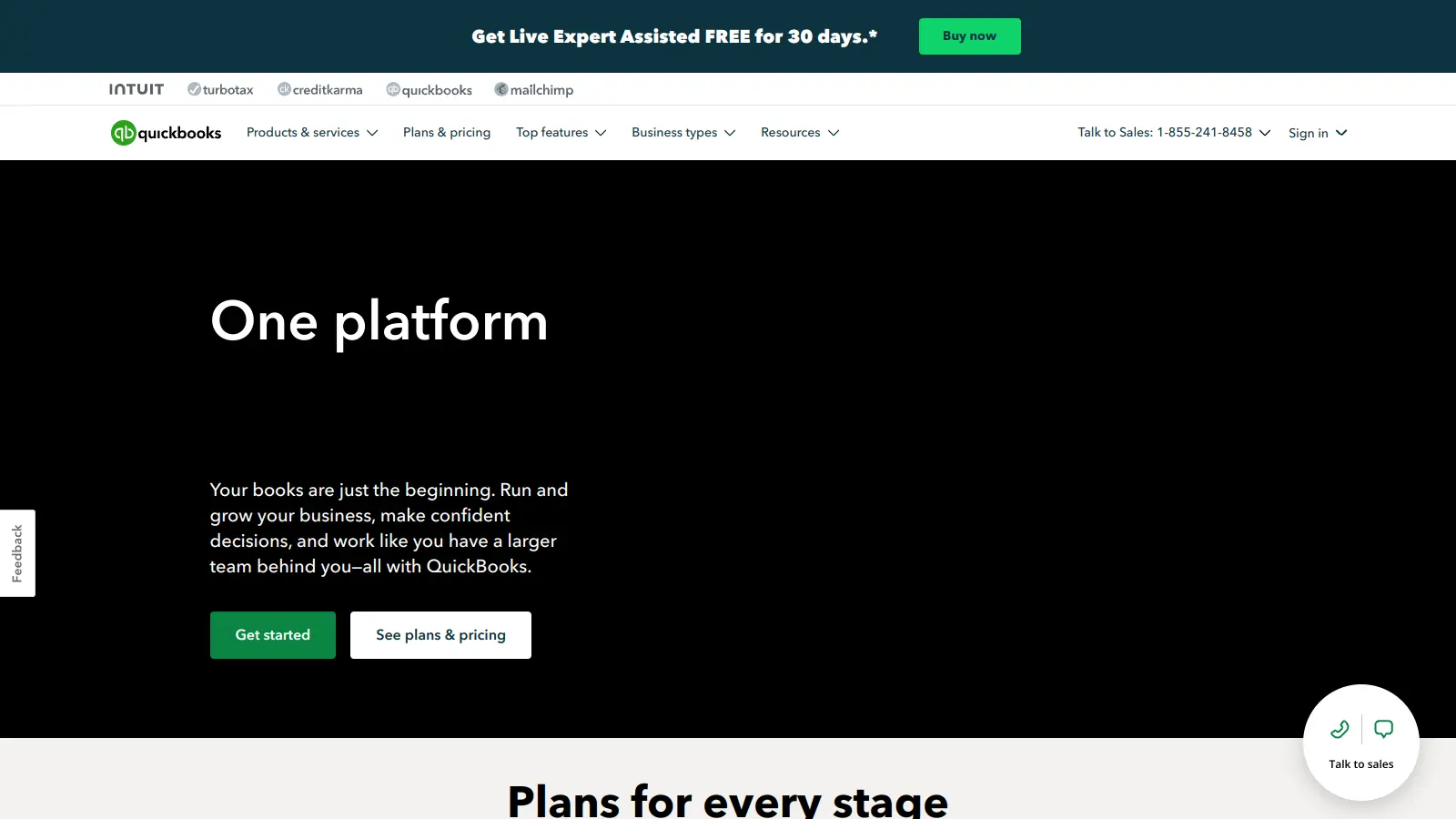
Quickbooks

QuickBooks is financial management software designed to help businesses of all sizes manage their finances. It offers features including invoicing, expense tracking, payroll processing, inventory management, and tax preparation. Available in desktop and online versions, QuickBooks provides scalable solutions with pricing tiers for different business needs, from solopreneurs to large enterprises.

best deal

Get 50% off QuickBooks for your first 3 months — Simple Start just $19/month

Square screenshot
online buzz823k
trend (1M)steady
3.8based on real user feedback, community sentiment, pricing value, and fit for target audience. see our full methodology

Square

Square is a payment processing and business management platform that offers multi-channel payment solutions, point-of-sale systems, inventory management, and analytics. It supports credit cards, digital wallets, and bank transfers, provides integrated hardware, enables e-commerce integration, and ensures secure transactions with PCI compliance. The platform now includes Square AI, a conversational AI assistant that analyzes business data and provides insights.

best deal

Try Square Plus Free for 30 Days - No Credit Card Required

Microsoft SharePoint screenshot
online buzz550k
trend (1M)steady
3.5based on real user feedback, community sentiment, pricing value, and fit for target audience. see our full methodology

Microsoft SharePoint

Microsoft SharePoint is a web-based collaboration platform that helps organizations create team sites, intranets, and document management systems. It integrates with Microsoft 365 tools, offering features like real-time co-authoring, version control, security controls, customizable sites, and workflow automation.

best deal

Try SharePoint Plan 1 for just $5/month - Get 1TB pooled storage, real-time collaboration & core document management features

Wave screenshot
online buzz368k
trend (1M)18%
3.8based on real user feedback, community sentiment, pricing value, and fit for target audience. see our full methodology

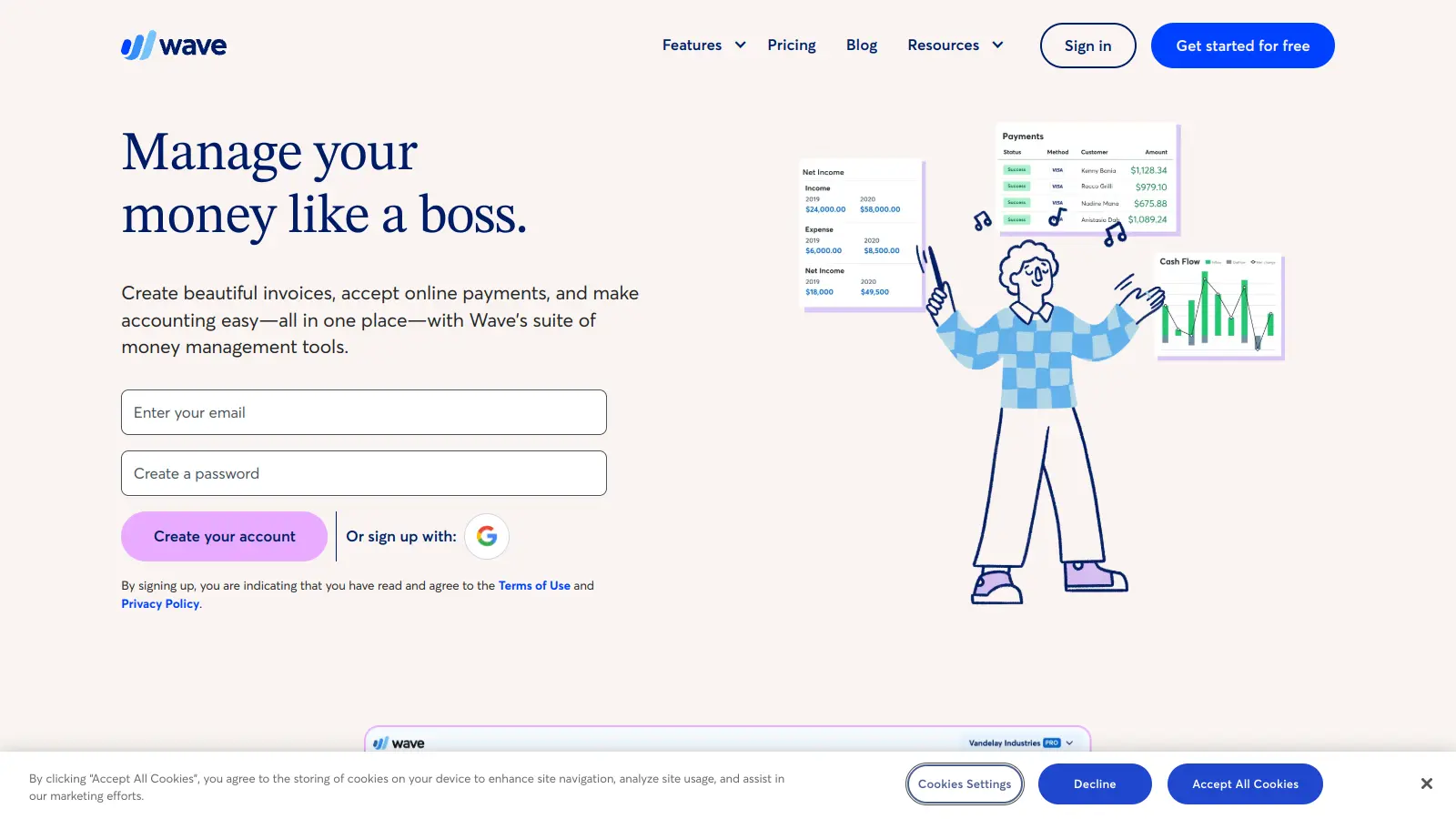
Wave

Wave is a financial management tool for small businesses, offering free and paid plans with features like unlimited invoicing, payment processing, bookkeeping, expense tracking, and payroll management. It provides an easy-to-use platform that helps entrepreneurs manage their financial operations, with options to accept online payments, generate financial reports, and track expenses, making it suitable for small business owners seeking a cost-effective accounting solution.

best deal

Get $28.50 off the first 3 months of Wave Pro Plan with auto-import, unlimited receipt scanning, and discounted payment processing fees.

Fireflies.ai screenshot
online buzz301k
trend (1M)steady
3.8based on real user feedback, community sentiment, pricing value, and fit for target audience. see our full methodology

Fireflies.ai

Fireflies.ai is an AI-powered meeting assistant that automates transcription, note-taking, and analysis across communication platforms. It offers real-time transcription in over 100 languages, generates AI summaries, identifies action items, provides search capabilities, and integrates with popular work tools. The platform helps teams save time by capturing meeting details automatically and providing searchable insights into conversations.

best deal

Try Free: Get 800 minutes of AI transcription per month with basic meeting notes and search features. Annual billing saves 44% on Pro and 34% on Business plans.