Project Management Software+2 more

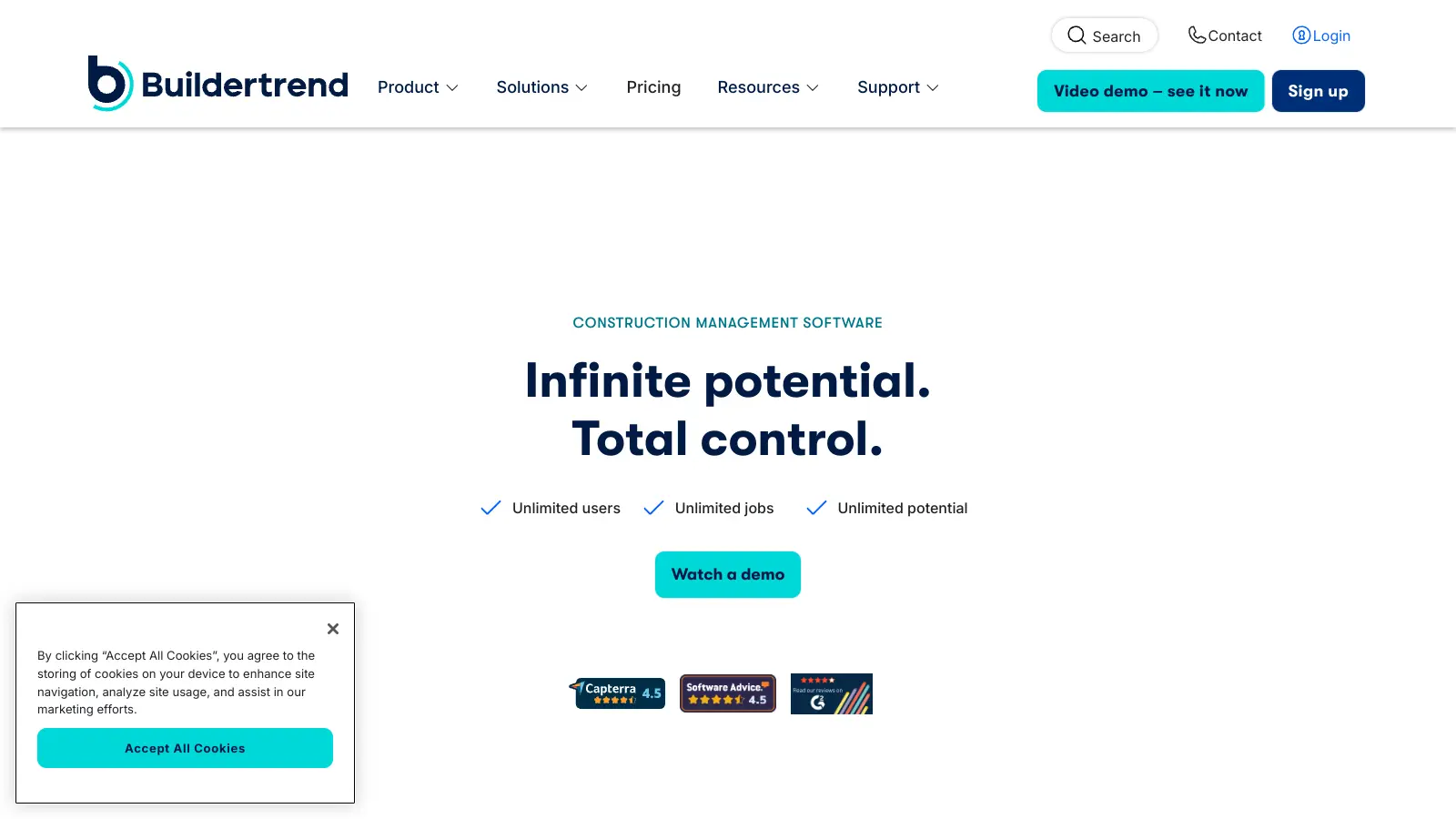
Buildertrend
best deal
Try Buildertrend's Essential Plan for around $199 your first month with promotional pricing and save with annual billing discounts
redeem now
Buildertrend
best deal
Try Buildertrend's Essential Plan for around $199 your first month with promotional pricing and save with annual billing discounts
redeem nowWe start with direct ratings from our readers, then look at what real users are saying in practitioner forums and community spaces. We pair that with search demand data and profession-level persona analysis.
Editorial note: this was originally published in september of 2024
quick take
based on real user feedback, community sentiment, pricing value, and fit for target audience. see our full methodology
used Buildertrend? we'd love to know your thoughts
reader ratings shape our score
Buildertrend is a cloud-based construction management platform that puts project scheduling, client communication, financial tracking, and subcontractor coordination into a single interface, purpose-built for residential construction. Custom home builders managing multi-phase builds get the clearest return: the client portal, change order workflows, and QuickBooks integration address the specific overhead that scales badly on complex projects. Construction office managers gain once onboarding is complete, but small remodeling contractors consistently find the feature set exceeds what they actually need. The tradeoff is straightforward: Buildertrend goes deeper on construction-specific workflows than any general project management tool, but that depth comes with a price floor around $399/month and an onboarding curve measured in weeks.
Pricing starts at $399/month on the Essential Plan, or roughly $339/month on annual billing. The Advanced Plan runs $699-$799/month and adds formal change-order workflows and detailed estimating takeoffs. The platform runs on web and mobile, integrates natively with QuickBooks and Xero, and supports unlimited users across all plans. Before trialing it, know that the setup requires real time investment from whoever runs your office: budget for a proper onboarding process rather than expecting the team to self-teach. If you're running multiple concurrent builds with admin complexity to match, it's worth a serious look. If you're a solo contractor doing straightforward jobs, the cost won't pay for itself.
monthly search interest
49.5k/mo now
Buildertrend's search volume has held remarkably flat for over three years, oscillating between 40,500 and 60,500 monthly searches with a predictable seasonal rhythm rather than any clear growth or decline trend. This is the signature of a mature, category-defining tool with a stable core audience: it's not acquiring new users at scale, but it's not losing them either. For someone evaluating it now, that stability means the product is well-established and unlikely to disappear, but it also means you're not catching an early-adopter wave.
Whether Buildertrend earns its monthly fee depends almost entirely on the scale and complexity of your work. Pick your role below to see the honest breakdown for your situation.
overall sentiment
select your role to see what people like you are saying
Custom Home Builder
positiveIf you're running multiple high-value builds simultaneously, Buildertrend's combination of client portal, change order management, and detailed financial tracking is hard to replicate with separate tools. At $399-$499/month, the cost is easier to absorb across several concurrent projects. Budget real time for team training before you expect it to run smoothly.
strengths
concerns
Small Remodeling Contractor
negativeAt $399/month minimum, Buildertrend is a tough sell if you're running a handful of kitchen and bath jobs with a small crew. You'll pay for change order workflows, formal estimating systems, and client portals that add genuine overhead for straightforward projects. The ROI just isn't there unless your job volume and profit margins are growing fast.
strengths
concerns
Construction Office Manager
mixedOnce you're through onboarding, the QuickBooks and Xero integration and centralized document management genuinely reduce the scattered-files problem most construction offices have. The catch is getting there: expect several weeks before the system runs at full efficiency, and that training time has to come from somewhere. Worth it long-term for a busy office, but the implementation period is real.
strengths
concerns
General Contractor Managing Multiple Job Sites
positiveManaging multiple active job sites is exactly the use case Buildertrend was built for. Scheduling, subcontractor coordination, and daily logs across several projects in one place reduces the communication overhead that kills efficiency when you're juggling sites. The learning curve and $399/month entry cost are easier to justify when the alternative is missed updates and billing disputes across five concurrent jobs.
strengths
concerns
“They made it dummy proof but the workflow is terrible and incredibly slow for anyone who has a mild idea of what they're doing (compared to Project, Asta, P6, etc.).”
Reddit r/ConstructionManagers
The most direct community feedback on Buildertrend comes from r/ConstructionManagers, where one user transitioning from Microsoft Project, Asta, or Primavera P6 described the scheduling workflow as "dummy proof but terrible and incredibly slow for anyone who has a mild idea of what they're doing." That framing captures something real: Buildertrend is built for construction business owners who want guided, consolidated workflows, not for project management professionals who already have scheduling expertise and want speed. Independent review coverage from editorial outlets confirms the platform is genuinely full-featured, but consistently flags the same friction points: a steep learning curve, a training investment measured in weeks rather than days, and a price floor that starts around $399 per month even on the entry plan. Across commercial review platforms, the tool earns middling scores that cluster around the "does what it says, but expensive and complex to adopt" verdict.
It depends on your project volume, not your business size. The Essential Plan at $399/month (or around $339/month on annual billing) is justifiable if you're managing multiple concurrent builds where consolidated scheduling, client portals, and QuickBooks integration genuinely replace two or three separate tools. If you're running one or two remodeling jobs at a time with a small team, you'll struggle to recover that cost from efficiency gains alone. The Advanced Plan at $699-$799/month is only worth considering if you need formal change-order workflows and detailed takeoffs regularly built into your estimates.
Custom home builders running multi-phase, high-value projects get the clearest return. The platform was designed for exactly that complexity: detailed timelines, client-facing portals, change order management, and financial tracking across concurrent builds. Construction office managers also benefit once the onboarding is behind them, particularly through the QuickBooks and Xero integrations. Small remodeling contractors doing straightforward jobs will find it over-engineered for their actual needs.
Two issues come up consistently. First, the onboarding takes weeks, not days, and that training investment pulls your team away from billable work during the transition. Second, the scheduling interface frustrates users who come from dedicated project management tools like Microsoft Project or Primavera P6. The workflow is simplified for non-technical users, which means experienced project managers find it slower and less flexible than what they're used to. There's also no affordable entry point: at $399/month minimum, there's no way to start small and scale up.
These tools aren't really competing for the same job. Microsoft Project is a pure scheduling and project management tool with no construction-specific features, no client portal, and no financial tracking built in. Buildertrend covers the full construction workflow from estimates to final invoice in one platform. Choose Microsoft Project if you're a project management professional who wants precise scheduling control and already handles client communication and finances elsewhere. Choose Buildertrend if you want one platform that handles the whole client-to-completion lifecycle for residential construction.
Not immediately. The platform's own learning curve is a recurring theme in user feedback, and the construction office manager experience in particular points to a multi-week onboarding period before the system runs efficiently. The scheduling interface has been flagged as cumbersome for anyone accustomed to professional project management software. If your team doesn't have dedicated admin time to absorb the setup, consider whether you have the bandwidth to implement it properly before committing to a monthly contract.
toolsforhumans editorial team
Reader ratings and community feedback shape every score. Since 2022, ToolsForHumans has helped 600,000+ people find software that holds up after launch. how we research →
is this your tool?
claim your listing to update details, respond to our review, or upgrade to a featured partnership.
claim this listing →
Asana is a web-based project management platform that enables teams to organize, track, and collaborate on work. It offers task management, multiple project views (lists, boards, timelines), AI features for automating workflows, communication tools, progress tracking, and integrations with over 200 apps. Available in free and paid plans, Asana supports teams of all sizes with flexible project visualization options.
best deal
Try Asana free with the Personal Plan for 1-2 users, or start a 30-day free trial of paid plans to test AI features and advanced workflows.

Polaris PSA is a professional services automation tool that helps service organizations manage projects, resources, and financials. It uses AI to capture real-time data, provide recommendations, and enable proactive decision-making. The platform includes automatic time tracking, resource matching, and integrations with Salesforce and 100+ work apps.
best deal
Free Trial Available for Polaris PSA

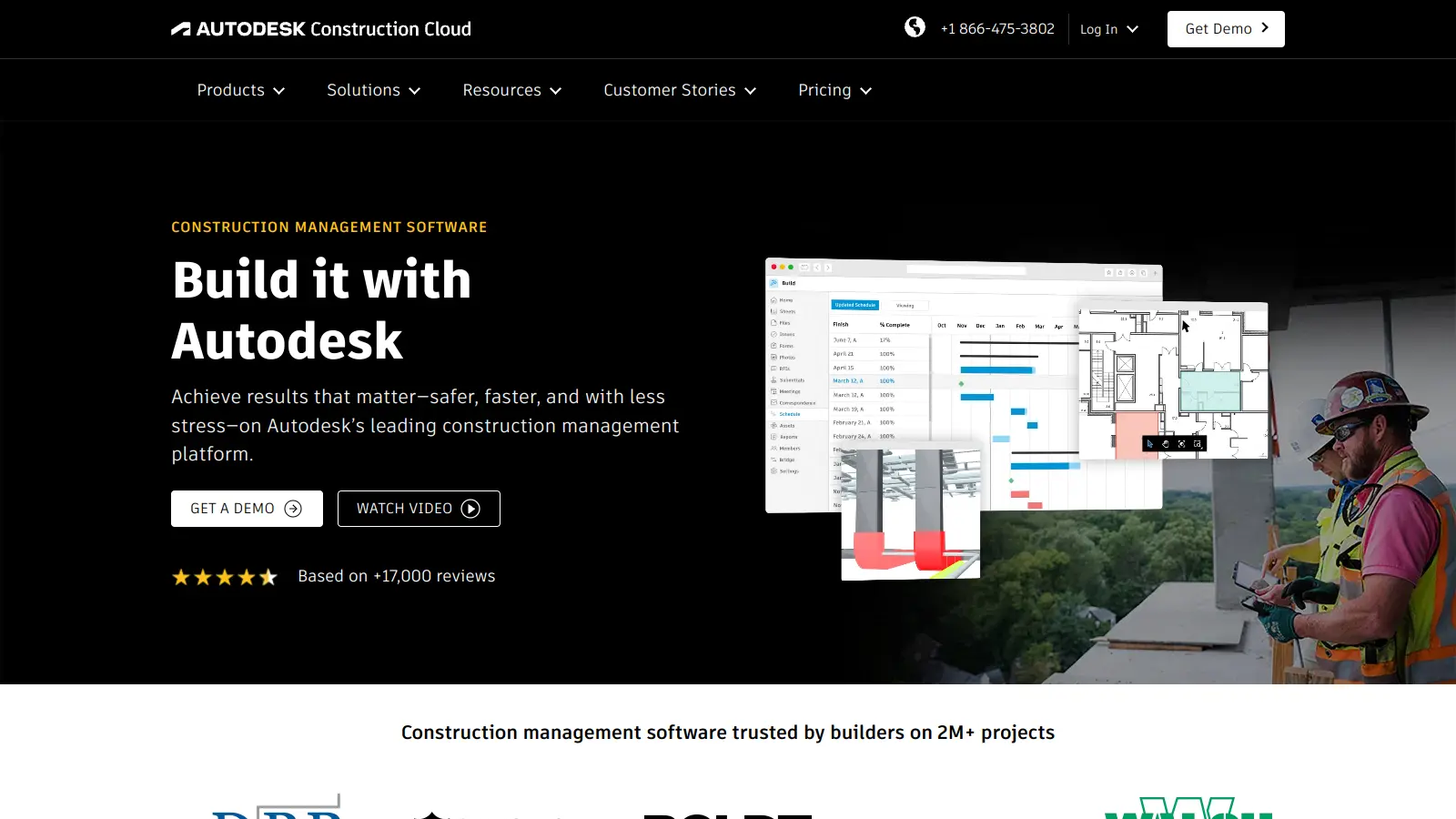
Autodesk Construction Cloud is a construction management platform that connects project teams from design to operations. It offers AI-powered workflow automation, document management, model coordination, and project management tools, letting construction professionals collaborate securely, reduce risks, and deliver projects on time and on budget through cloud-based web and mobile interfaces.
best deal
Free access available for educators through Autodesk Education Plan

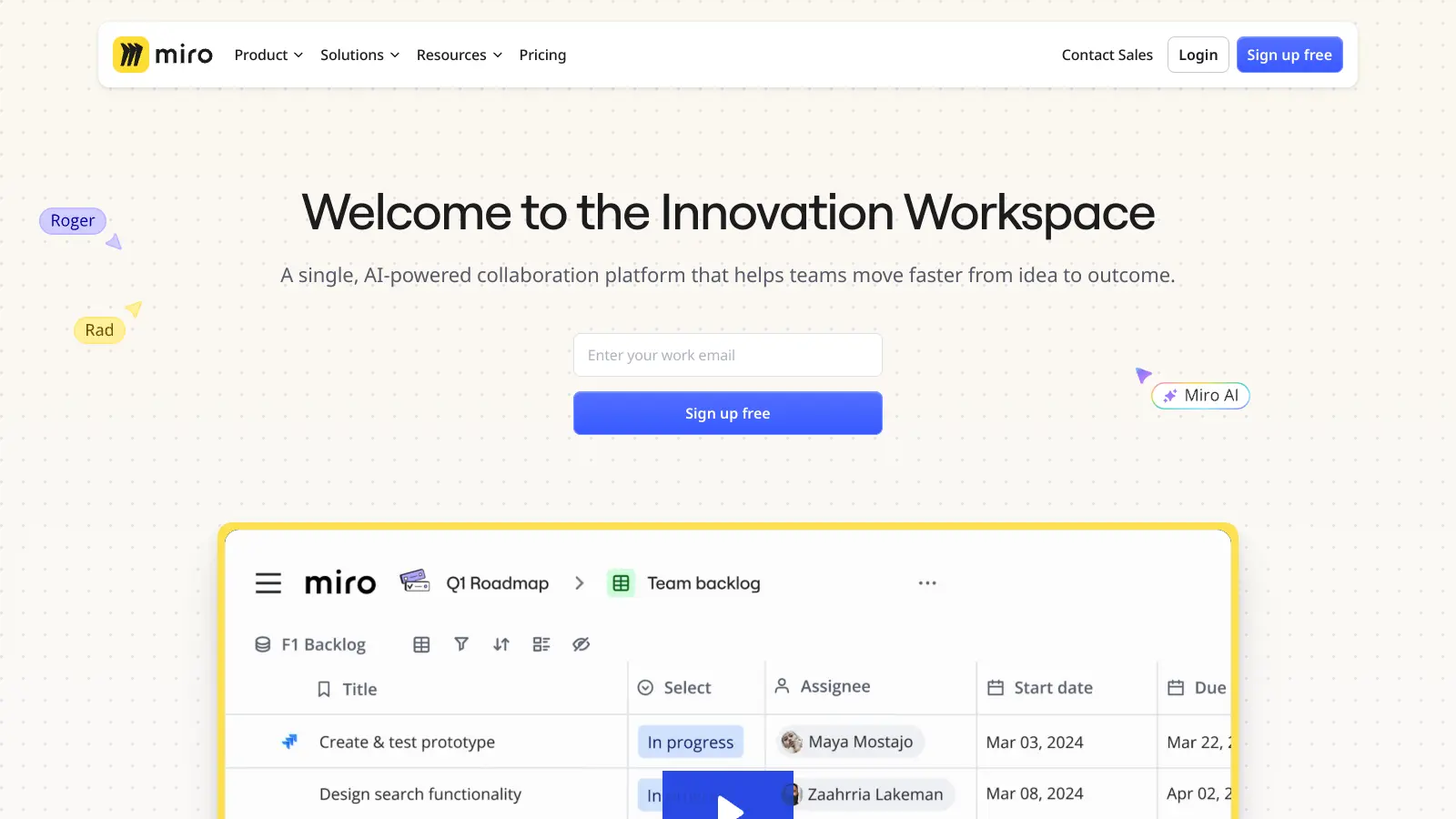
Miro is an AI-powered visual collaboration platform with an infinite canvas for teams to brainstorm, plan, design, and manage projects. It includes real-time collaboration tools, AI features for automating tasks like organizing sticky notes and generating user stories, and integrations with 250+ apps.
best deal
Explore Miro's free plan with unlimited team members, 3 boards, 5 Talktracks, and 10 AI credits monthly

Whimsical is a collaborative visual workspace that helps teams brainstorm, plan, and execute ideas through integrated tools like flowcharts, wireframes, mind maps, and docs. It offers real-time collaboration, AI-powered assistance, and an intuitive interface for project management, with pricing plans ranging from free to enterprise-level solutions.
best deal
Start with Whimsical's Free Plan - No credit card required. Get unlimited workspace members, 3 team boards, unlimited docs, and 100 AI actions to visualize your ideas today.

Houzz Pro is business management software for professionals in construction, remodeling, and design. It features AutoMate, a suite of AI tools that automate takeoffs, estimates, scheduling, expense tracking, and voice-activated project management, helping businesses create branded proposals, manage projects, and build their online presence through 3D floor planning and targeted advertising.
best deal
Try Houzz Pro free for 30 days, then $249/month for Pro plan with full features