Governance Risk & Compliance Grc Platform+2 more

LogicGate
best deal
Get started with Risk Cloud from $13,765/year and automate your compliance process with AI-powered features
redeem now
LogicGate
best deal
Get started with Risk Cloud from $13,765/year and automate your compliance process with AI-powered features
redeem nowWe start with direct ratings from our readers, then look at what real users are saying in practitioner forums and community spaces. We pair that with search demand data and profession-level persona analysis.
Editorial note: this was originally published in august of 2024
quick take
based on real user feedback, community sentiment, pricing value, and fit for target audience. see our full methodology
used LogicGate? we'd love to know your thoughts
reader ratings shape our score
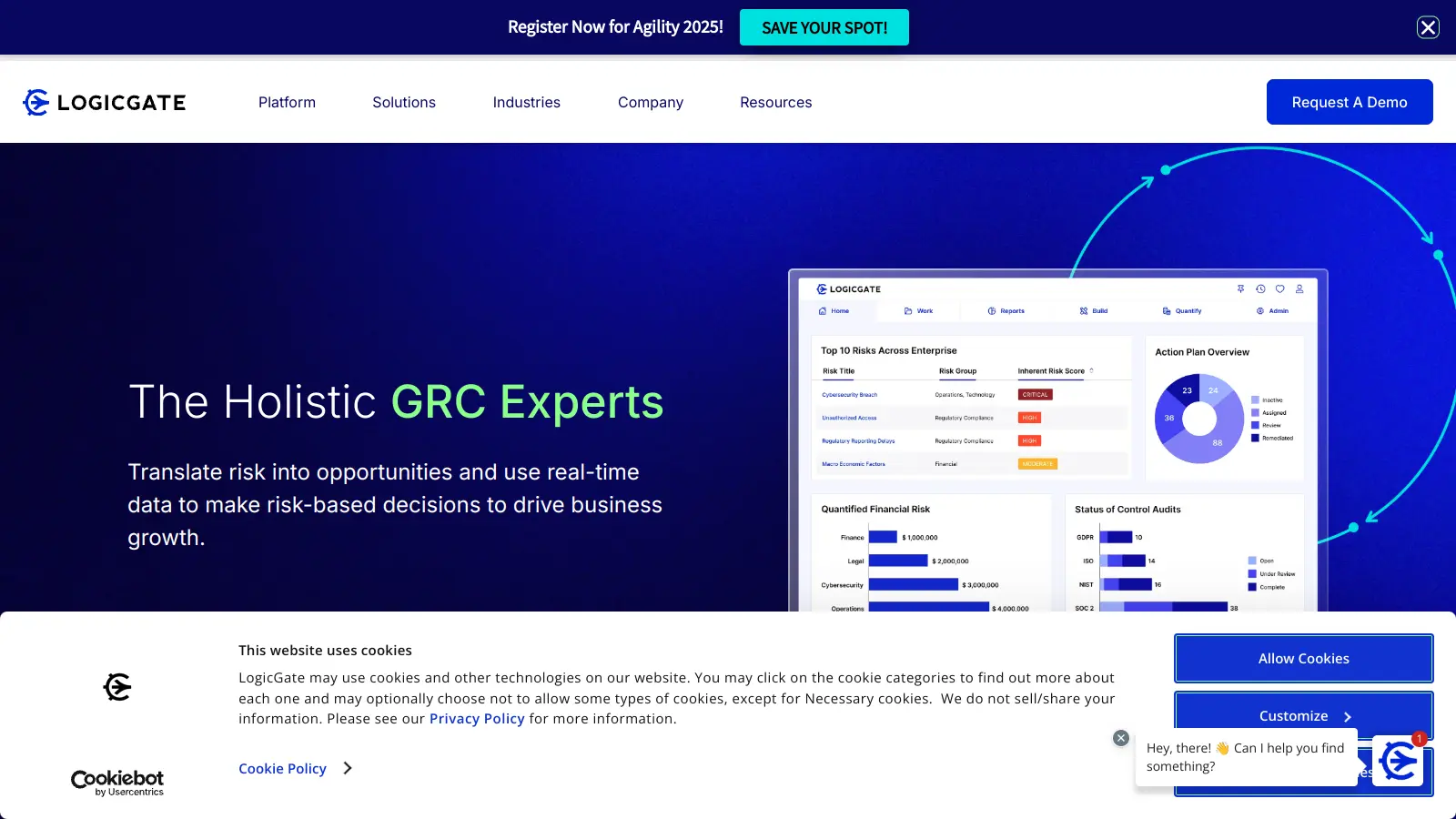
LogicGate offers an AI-powered Governance, Risk, and Compliance (GRC) platform called Risk Cloud. This software helps organizations handle their risk management, compliance, and operational resilience needs through a user-friendly interface with built-in artificial intelligence capabilities.
The platform uses a no-code approach built on a graph database, making it accessible for teams without technical expertise. Organizations can automate their compliance processes, manage cyber risks, and maintain policy controls all in one place. The graph database structure makes connections between risks, controls, and policies visible, giving users a clear view of their security landscape.
Founded in 2015 in Chicago, LogicGate has grown to serve healthcare, banking, software, and insurance companies. The platform's pricing starts around $13,765 annually for entry-level implementations, with median costs around $52,567 per year based on specific business needs and chosen features.
Companies can choose from different implementation packages, from basic setup to fully customized solutions. The platform also works well with other business tools through its API and built-in integrations, helping teams automate their workflow and stay on top of compliance requirements.
monthly search interest
22.2k/mo now
LogicGate's search volume has followed a consistent seasonal pattern for over three years, spiking every September and bottoming out each summer. This isn't a growth story or a decline story: it's a stable niche tool with a predictable procurement cycle, likely tied to annual compliance and audit planning seasons. The audience isn't growing fast, but it isn't shrinking either, which means you're evaluating a mature product rather than an early-stage one.
Whether LogicGate earns its cost depends almost entirely on your role and the scale of what you're managing. Pick your role below to see the honest breakdown.
overall sentiment
select your role to see what people like you are saying
Compliance Officer
positiveIf you're managing policy acknowledgments and compliance documentation across a large organisation, LogicGate's no-code workflow setup and automated audit trails genuinely reduce the manual tracking burden. The reporting features are solid enough for board-level sign-off. The frustration kicks in when your compliance processes don't map neatly to the platform's workflow templates, and at $52,000+ annually at median spend, smaller teams will feel the cost before they feel the full benefit.
strengths
concerns
Risk Manager
positiveThe unified risk dashboard and connected assessment view are LogicGate's strongest features, and if you're regularly presenting risk posture to executives, the reporting capabilities are worth having. The catch is performance: when you're aggregating risk data across a large, complex organisation, the platform slows down. Integration with legacy risk systems also takes real effort. It works well if you're building a risk programme from scratch; it's harder to retrofit into an existing toolchain.
strengths
concerns
Audit Professional
mixedLogicGate automates the parts of audit work that eat the most time: evidence collection, finding tracking, and status reporting. For smaller, well-defined audit scopes, it does the job cleanly. The problems show up at scale: large multi-team audits hit performance limits, and if your audit methodology doesn't fit the standard workflow templates, you'll be working around the tool rather than with it. It's useful, but it's not built primarily for audit teams, and that shows.
strengths
concerns
IT Security Team Lead
mixedIT Security Teams benefit from improved cybersecurity risk visibility and the platform's no-code approach that reduces IT dependency for compliance teams. However, they face integration challenges with legacy security systems and performance concerns with large-scale vulnerability/risk datasets.
strengths
concerns
“At a median annual spend of over $52,000, you need to be using automated evidence testing, Spark AI, and the full workflow automation suite to justify it, and most teams aren't.”
Community discussion around LogicGate is thin on independent forums, with the available review data coming from commercial review platforms only. The consistent themes that surface: users repeatedly cite the no-code customisation and ease of deployment as genuine strengths, and the flexibility to build workflows without developer involvement gets mentioned often enough to be credible. On the flip side, the criticism that appears consistently centres on pricing accessibility for mid-market organisations, performance when datasets get large, and a learning curve that steepens quickly once you move past the basic setup. The platform starts at roughly $13,765 per year and can reach $150,000 annually, so the complaints about cost relative to value are predictable and real. Integration with legacy systems is the other recurring friction point, particularly for teams that already have audit tools in place.
For large enterprises running complex, multi-framework GRC programmes, yes. The entry-level tier starts at around $13,765 per year, but the median annual spend is closer to $52,567. At that price, you need to be using automated evidence testing, Spark AI features, and the full workflow automation suite to justify it. If you're buying one or two applications and using basic reporting, you're overpaying for functionality you won't use.
Compliance Officers managing policy acknowledgments and audit trails across a large organisation get genuine value from it. Risk Managers who need board-level dashboards and real-time risk visibility are the other clear fit. Audit Professionals can use it, but they'll hit customisation limits more often than the other two groups.
Two stand out. First, performance degrades noticeably when you're managing large datasets across multiple teams, which matters most for Audit Professionals running multi-entity engagements. Second, integration with legacy systems requires significant configuration work, and if your existing risk or audit tools aren't in LogicGate's connector list, you're looking at custom work or manual data transfers.
If your organisation already runs ServiceNow, use ServiceNow GRC. The integration overhead alone tips the balance. LogicGate has an edge in implementation speed for teams starting from scratch, because the no-code setup is genuinely faster to get live than ServiceNow's configuration process. But ServiceNow wins on ecosystem breadth and long-term scalability. Choose LogicGate if you need a dedicated GRC platform deployed quickly with minimal IT involvement.
The automated evidence testing feature, which runs pass/fail checks as soon as files are collected, is the most genuinely useful AI feature in the platform for audit work. It removes the bottleneck of manual control validation. The Spark AI Autofill, which populates forms from existing documentation, is useful but requires well-structured source documents to work cleanly. If your documentation is inconsistent or lives across multiple formats, expect to review and correct the outputs.
toolsforhumans editorial team
Reader ratings and community feedback shape every score. Since 2022, ToolsForHumans has helped 600,000+ people find software that holds up after launch. how we research →

PowerDMS is a cloud-based policy and compliance management platform for public safety agencies and healthcare organizations. It offers AI-driven tools for managing policies, training, internal affairs investigations, and accreditation through a secure, centralized system.
best deal
PowerDMS offers a free trial - compare custom pricing plans for your policy and compliance management needs

Mimecast is a cloud-based cybersecurity platform that provides email security, archiving, and continuity solutions. It protects against phishing, malware, ransomware, and business email compromise using AI-powered detection engines, URL scanning, attachment sandboxing, and user awareness training.
best deal
Explore Mimecast's Protect Plan with AI-powered email security starting today.

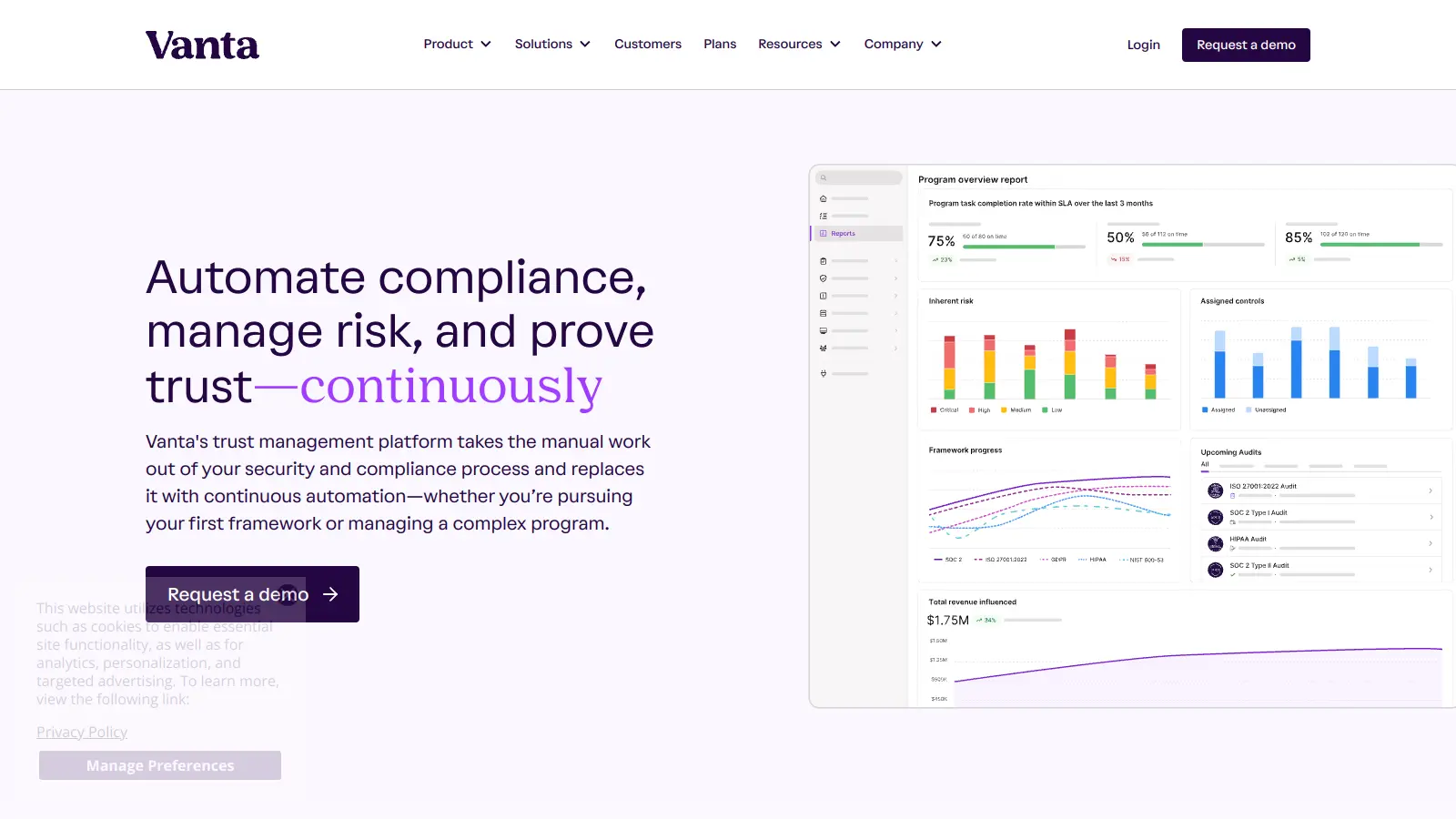
Vanta is a compliance and security platform that automates up to 90% of compliance work for major security frameworks like SOC 2 and ISO 27001. It offers automated evidence collection, policy management, access control, and AI-powered tools to help businesses streamline compliance processes, strengthen security, and build stakeholder trust.
best deal
Free trial available with no credit card required. Core plan starts at $7,500 annually.

Snyk is an AI-driven developer security platform that scans code for vulnerabilities, license compliance issues, and provides AI-powered fixes using static and dynamic analysis. It integrates with IDEs, Git workflows, and CI/CD pipelines for real-time scanning across open-source dependencies, container images, infrastructure as code, and proprietary code.
best deal
Try Snyk Free: Unlimited tests on open-source projects, 200 tests on private projects, 100 container tests with IDE plugins, CI/CD integration & continuous monitoring.

Luminance is an AI-powered legal technology platform that automates contract management, review, drafting, and negotiation using its proprietary Large Language Model. Founded in 2015 by Cambridge mathematicians, it serves over 1,000 organizations worldwide including law firms, corporate legal teams, and global consultancies. The platform offers deep document analysis, integration with Microsoft Word, and AI-driven features that reduce contract processing time while ensuring compliance and data security.
best deal
Get Your Personalized Luminance Quote And See How AI Legal Tools Can Transform Your Contract Management

Drata is a cloud-based compliance automation and GRC platform that helps organizations streamline audit readiness across multiple frameworks. Founded in 2020, the tool continuously monitors security controls, automates evidence collection, manages vendor risk using AI agents, and integrates with hundreds of cloud services and SaaS tools to provide real-time compliance monitoring across over 20 compliance standards.
best deal
See How Drata Can Automate Your Compliance Starting at $7,500/Year