UserGuiding reviews — what users really think

last reviewed 24 march 2026
how we review

We start with direct ratings from our readers, then look at what real users are saying in practitioner forums and community spaces. We pair that with search demand data and profession-level persona analysis.

full methodology →

Editorial note: this was originally published in september of 2024

quick take

  • Best for: early-stage SaaS teams shipping onboarding without dev support
  • Skip if: you're past 5,000 MAU or need analytics that prove onboarding ROI
  • £Best value: Starter at $174/month for sub-2,500 MAU products
½3.5/ 5 — editorial rating

based on real user feedback, community sentiment, pricing value, and fit for target audience. see our full methodology

used UserGuiding? we'd love to know your thoughts

reader ratings shape our score

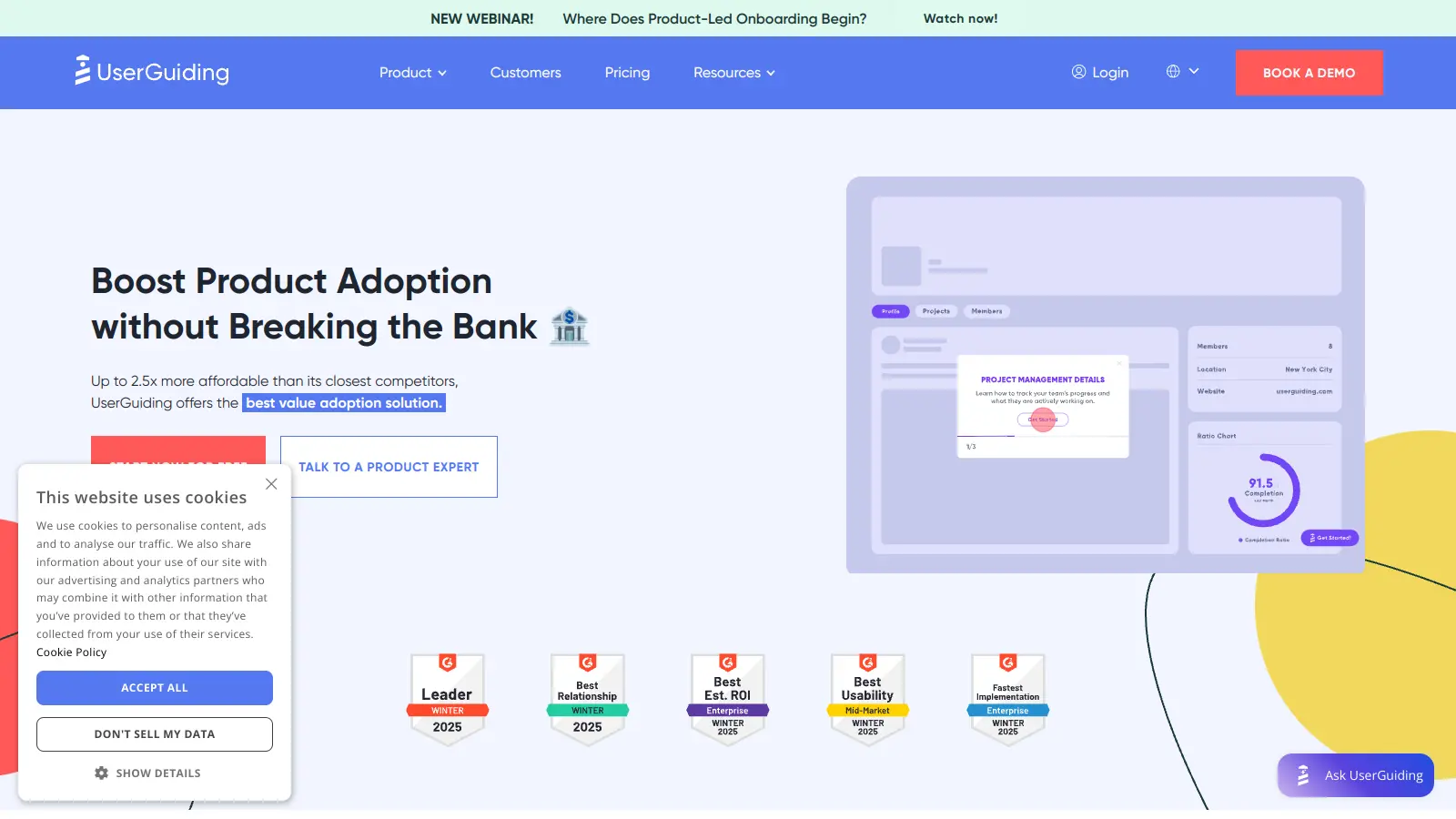
UserGuiding helps businesses create better onboarding experiences for their users through interactive guides, tooltips, and personalized content. This platform lets teams build walkthroughs and tutorials without needing to write code.

At its core, UserGuiding offers tools to guide users through websites and apps. Teams can create step-by-step tutorials, add tooltips, and build resource centers where users can find answers to their questions. The platform includes checklists to keep users on track and surveys to gather feedback about the user experience.

The tool works for companies of all sizes, from small startups to large enterprises. The Starter plan begins at $174 per month for up to 2,500 monthly active users, while larger organizations can opt for more comprehensive packages with additional features and support.

UserGuiding focuses on simplicity and accessibility. The platform includes an AI assistant for real-time support, analytics to track how users interact with guides, and options to create content in multiple languages. Some users want more detailed analytics and find visual customization limited. Others say achieving 100% successful implementation requires detailed CSS and HTML knowledge, making it less practical than advertised.

how popular is UserGuiding?

monthly search interest

480/mo now

02645288002023202420252026
peak interest720/moOct 2025
searches now480/moFeb 2026
1-month change19%vs prev month

UserGuiding's search volume has been remarkably stable for four years, oscillating between 480 and 720 monthly searches without any sharp growth curve or significant decline. This isn't a tool riding an AI hype wave; it's a specialist product with a consistent, defined audience. That stability means you're getting a mature, battle-tested product, but it also signals the tool isn't winning new market share at pace, so don't expect rapid feature development driven by user growth pressure.

who is UserGuiding for?

Whether UserGuiding's worth it depends almost entirely on your role and where your product is in its growth. Pick your role below to see the honest breakdown.

overall sentiment

select your role to see what people like you are saying

Product Manager

positive

If your backlog is full and you need onboarding improvements live this week, UserGuiding delivers. You can build and deploy feature guides in hours without writing a ticket. The hotspot targeting is genuinely useful for flagging new functionality. The gap is analytics: you'll know guides are being seen, but proving they moved activation or retention metrics requires stitching data together elsewhere.

strengths

  • Rapid deployment of feature guides without developer dependencies
  • Precise hotspot targeting for highlighting new functionality
  • Direct reduction in support tickets through self-service guidance
  • Quick setup allows faster time-to-value for product launches

concerns

  • Analytics lack depth to measure guide effectiveness and user behavior patterns
  • Complex user flows require manual adjustments, reducing time savings
  • Pricing scales with monthly active users, becoming expensive at scale

what users are saying

The pricing model punishes growth in a way that catches teams off guard, and the analytics still aren't deep enough to justify the jump to the Growth plan at $349 per month.

Community discussion around UserGuiding is thin but telling. The Reddit thread on r/SaaS comparing it to Appcues alternatives was deleted before the conversation could be captured, which leaves a gap in direct user opinion. The Navattic comparison piece, written by a competitor, positions UserGuiding as a capable but mid-tier option in the product tour space, noting its no-code builder and onboarding checklist features as genuine strengths, while flagging that it lacks the interactive demo capabilities and deeper analytics that teams evaluating tools in this category increasingly expect. Across commercial review platforms, UserGuiding sits in a respectable range with consistent praise for ease of setup and time-to-launch, but recurring criticism centres on the MAU-based pricing model becoming expensive as products grow, limited analytics depth, and visual customisation that falls short for teams with established design systems.

Our take: UserGuiding is a solid choice if you need to get onboarding guides live quickly without touching your engineering backlog. The Starter plan at $174/month is defensible for early-stage products with under 2,500 active users, but the pricing model punishes growth in a way that catches teams off guard. If you're already past 5,000 MAU or you need serious analytics to prove onboarding ROI, you'll find the Growth plan at $349/month harder to justify against Appcues or Navattic, which both offer more measurement depth. Don't subscribe before running the free trial against your actual onboarding flow.
features

  • Interactive Guides and Product Tours: Create step-by-step walkthroughs using tooltips, modals, highlights, buttons, and videos that guide users through specific website or app functions, helping them understand and navigate complex interfaces.
  • User Onboarding Checklists: Design structured task sequences with progress tracking to keep users motivated during the initial product exploration phase.
  • Hotspots and Tooltips: Highlight key interface elements and provide contextual information with customizable designs that match your brand's visual identity.
  • In-app Messages and Announcements: Communicate directly with users through real-time notifications and modals, keeping them informed about important updates.
  • Resource Centers and Knowledge Bases: Build organized help centers that guide users through learning curves with easy-to-navigate content.
  • NPS and In-app Surveys: Gather user feedback through customizable surveys with multiple question types to continuously improve user experience.
  • AI Assistant Support: Provide instant, multilingual user assistance with conversational support, PDF uploads, fallback actions, and personalized guide recommendations.
  • Analytics and Performance Tracking: Track user engagement and guide effectiveness with dashboards to optimize onboarding strategies and measure performance.
  • User Segmentation and Personalization: Target specific user segments with different experiences using attributes and filters with AND/OR logic, custom buttons, and personalized pathways.

pricing

  • Starter Plan costs $174 per month when billed annually, supporting up to 2,500 monthly active users with 25 active guides and hotspots, 2 onboarding checklists, and 5 surveys.
  • Growth Plan priced at $349 per month when billed annually, expanding to higher monthly active users and offering advanced features like custom roles, goal tracking, and integrations.
  • Enterprise Plan has custom pricing, designed for larger enterprises with customized features and tailored support options.
  • Support Essentials is available as a free tier.

frequently asked questions

At the Starter tier ($174/month annually), yes, for teams with under 2,500 MAU who need guides live without developer time. The maths works if avoiding even a few engineering sprints per quarter. But the Growth plan at $349/month is harder to justify unless you're actively using goal tracking, custom roles, and integrations, since the analytics still aren't deep enough to satisfy data-driven PMs at that price point.

Product Managers who need to ship onboarding improvements without queuing work for engineering, and Customer Success Managers scaling personalised onboarding without hiring more CS staff. It's less of a fit for UX Designers who need pixel-level control over how guidance elements look inside a polished design system.

Two limitations come up consistently. First, the analytics are shallow: you can see guide completion rates but can't easily tie onboarding touchpoints to downstream activation or retention metrics. Second, the pricing model scales with monthly active users, so a product with growing usage can see costs jump sharply without any corresponding increase in feature value. Complex guide logic also requires manual workarounds that eat into the time savings the tool promises.

Appcues has deeper flow logic, better analytics, and stronger A/B testing capabilities, but starts at a higher price point. If you're an early-stage team that needs something live in a day and don't need to run controlled experiments on your onboarding, UserGuiding wins on speed and simplicity. If you're optimising at scale and need to prove onboarding impact to stakeholders, Appcues is the more defensible choice.

Basic alignment is possible with the custom styling options, but if your product has a sophisticated design system, you'll hit the ceiling. Matching fonts, colours, and spacing works reasonably well. Truly custom modal shapes, animations, or component-level styling requires CSS and HTML knowledge, which undermines the no-code pitch and frustrates designers expecting full creative control.

tools for
humans

toolsforhumans editorial team

Reader ratings and community feedback shape every score. Since 2022, ToolsForHumans has helped 600,000+ people find software that holds up after launch. how we research →

other tools to check out

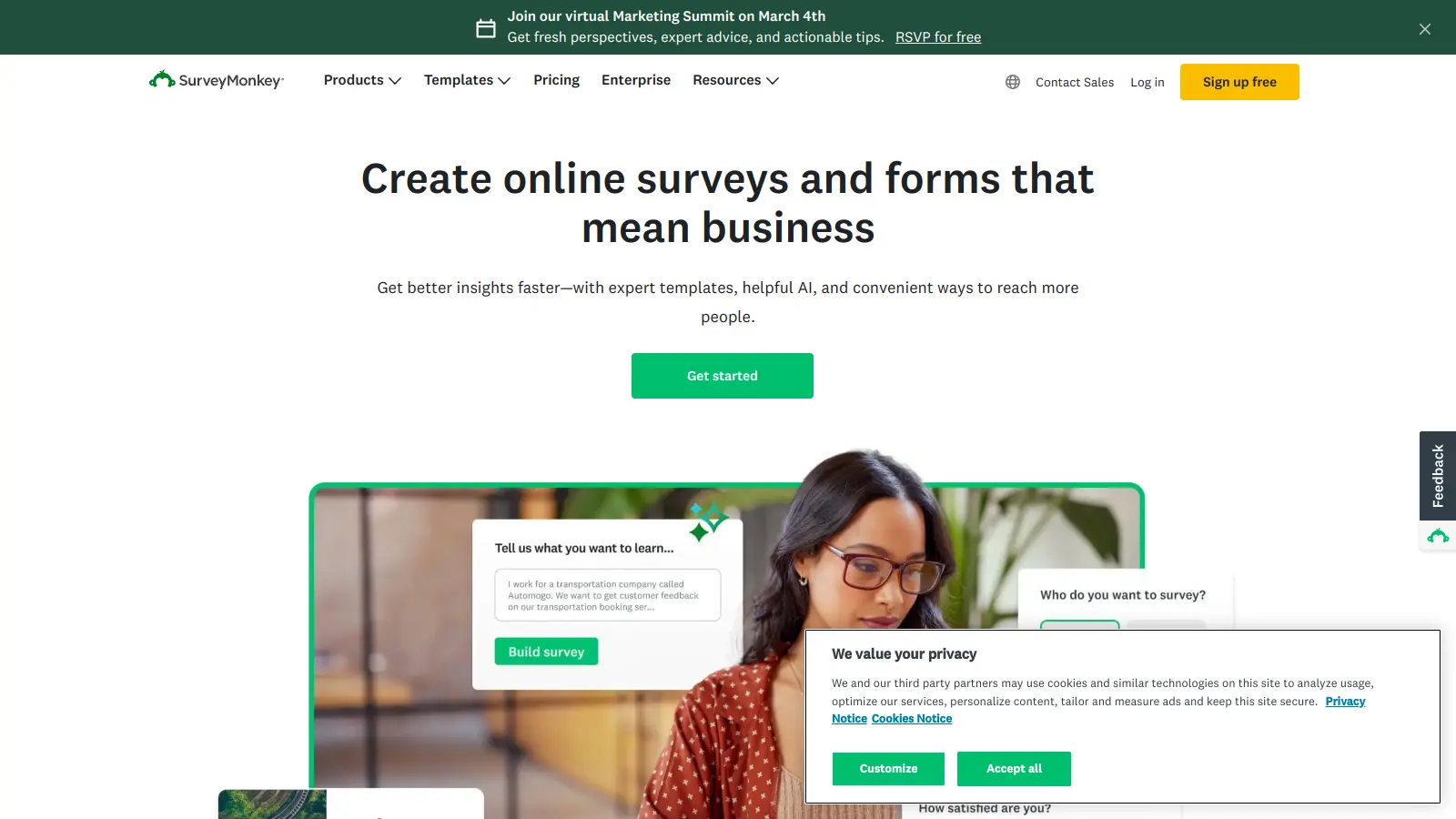
SurveyMonkey screenshot
online buzz165k
trend (1M)steady
3.5based on real user feedback, community sentiment, pricing value, and fit for target audience. see our full methodology

SurveyMonkey

SurveyMonkey is an online survey platform that enables users to create, distribute, and analyze surveys with customizable forms and AI-powered tools. It offers multiple question types, survey templates, advanced logic, and analytics tools. Used by individuals and enterprises, SurveyMonkey provides integrations with other tools and flexible pricing plans for research and feedback collection.

best deal

Try SurveyMonkey's Basic Plan free – Create unlimited surveys with up to 10 questions each

Qualtrics screenshot
online buzz135k
trend (1M)23%
3.5based on real user feedback, community sentiment, pricing value, and fit for target audience. see our full methodology

Qualtrics

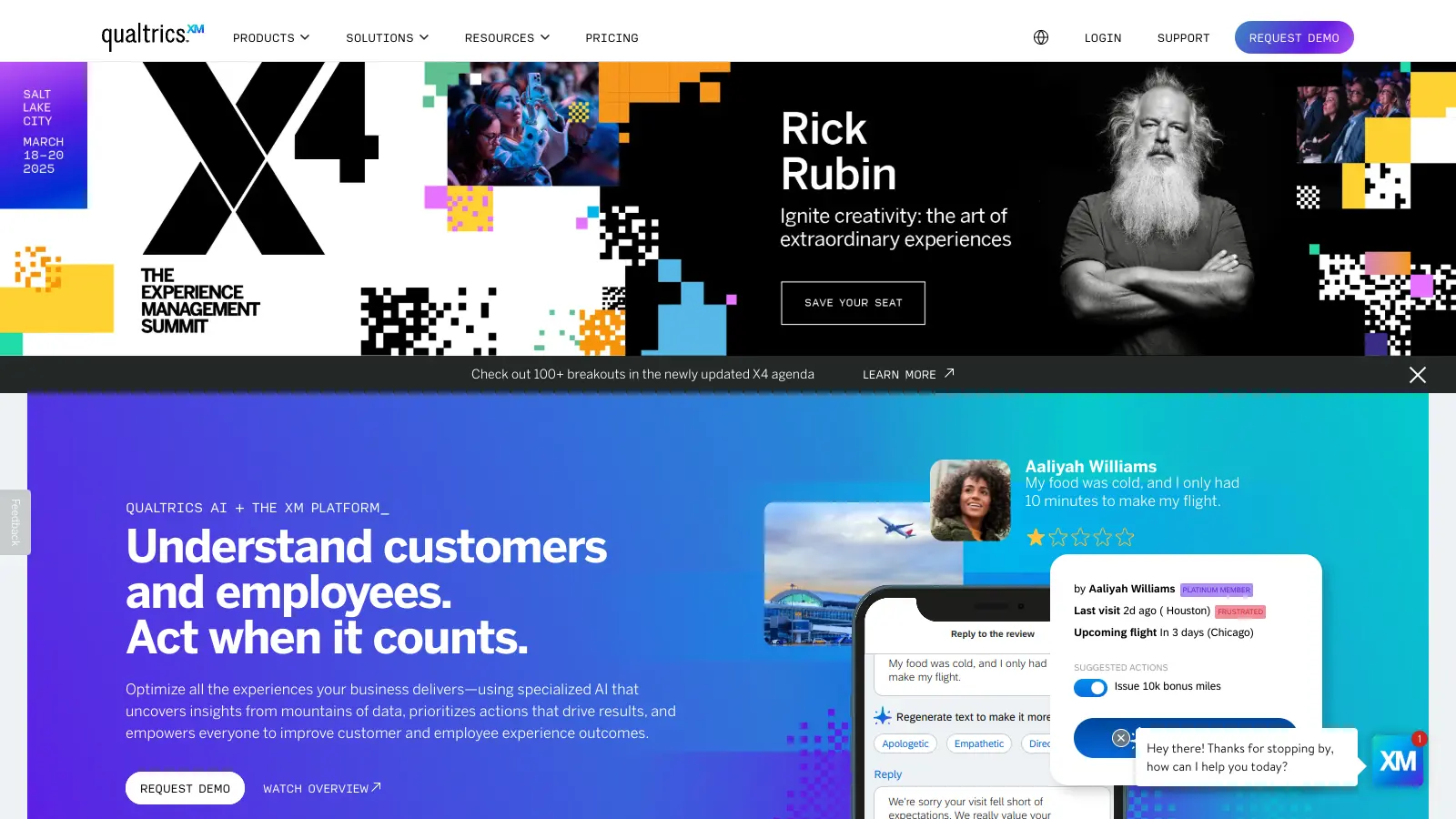
Qualtrics is an AI-powered experience management platform for creating, distributing, and analyzing surveys. It uses machine learning, natural language processing, and generative AI to collect and analyze feedback across surveys, video, calls, and chats. Features include customizable surveys, AI-driven analytics, and enterprise integrations.

best deal

Start Free Now: Get 500 survey responses with basic features on a single-user account

Typeform screenshot
online buzz61k
trend (1M)18%
3.5based on real user feedback, community sentiment, pricing value, and fit for target audience. see our full methodology

Typeform

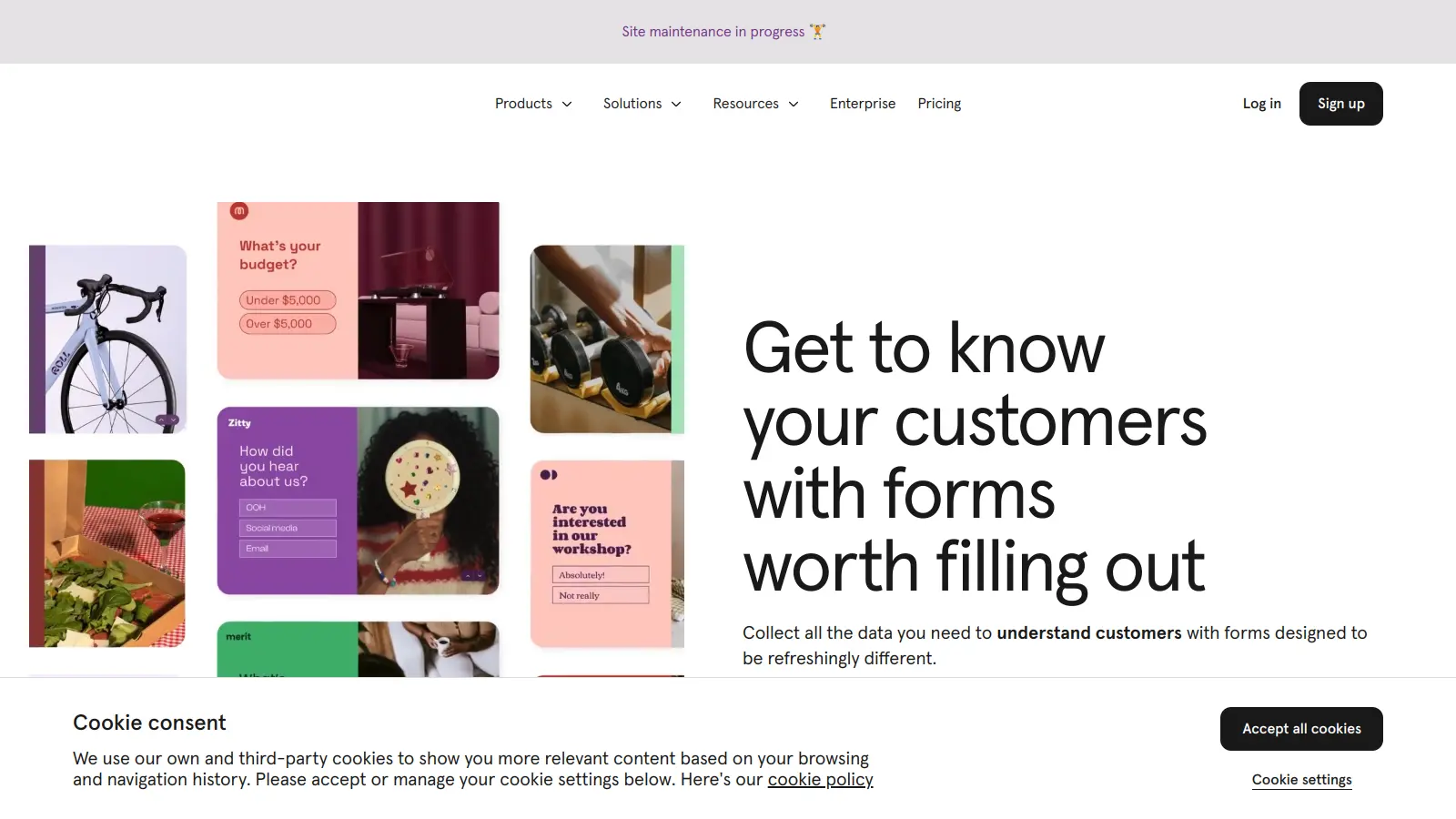
Typeform is an AI-powered form builder for creating interactive, conversational forms and surveys. It presents questions one at a time, leading to higher engagement and completion rates. With AI-generated form building, customizable templates, integrations with 500+ apps, and AI-powered insights that analyze responses, Typeform provides a solution for collecting data across industries.

best deal

Annual plans save 16% compared to monthly billing. Free plan available with 10 responses per month.

Heap screenshot
online buzz41k
trend (1M)18%
3.8based on real user feedback, community sentiment, pricing value, and fit for target audience. see our full methodology

Heap

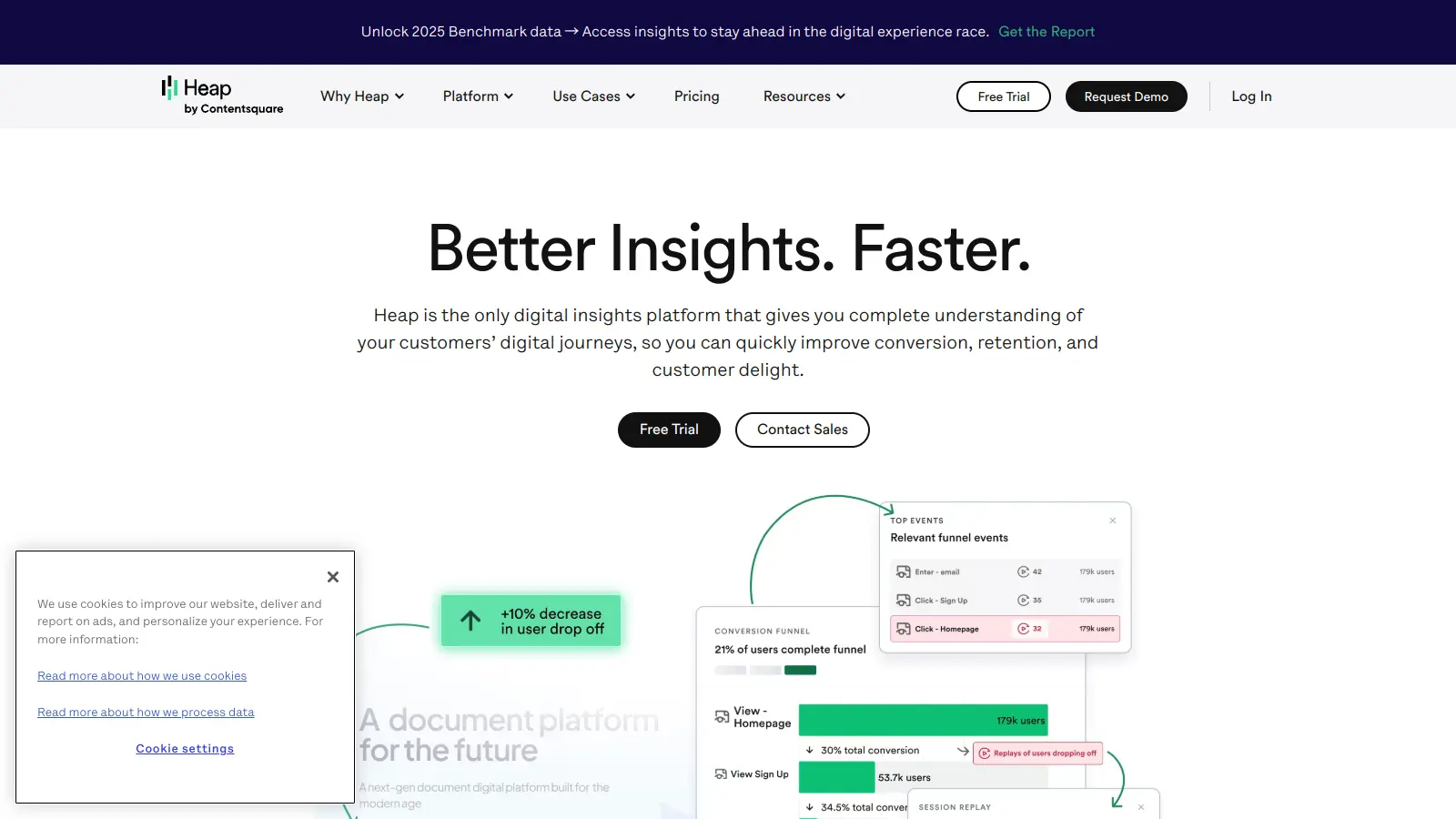
Heap is a digital insights platform that automatically captures all user interactions on websites and mobile apps to analyze user behavior, optimize funnels, and uncover insights. It uses AI-powered tools like CoPilot and Sense for natural language queries, plus data science features that detect friction points, helping product, marketing, and data teams make decisions without manual tracking setup.

best deal

Try Heap Free: Track 10,000 sessions/month with automatic capture, retroactive analysis, and 6 months data history (no credit card required)

Medallia screenshot
online buzz15k
trend (1M)steady
3.5based on real user feedback, community sentiment, pricing value, and fit for target audience. see our full methodology

Medallia

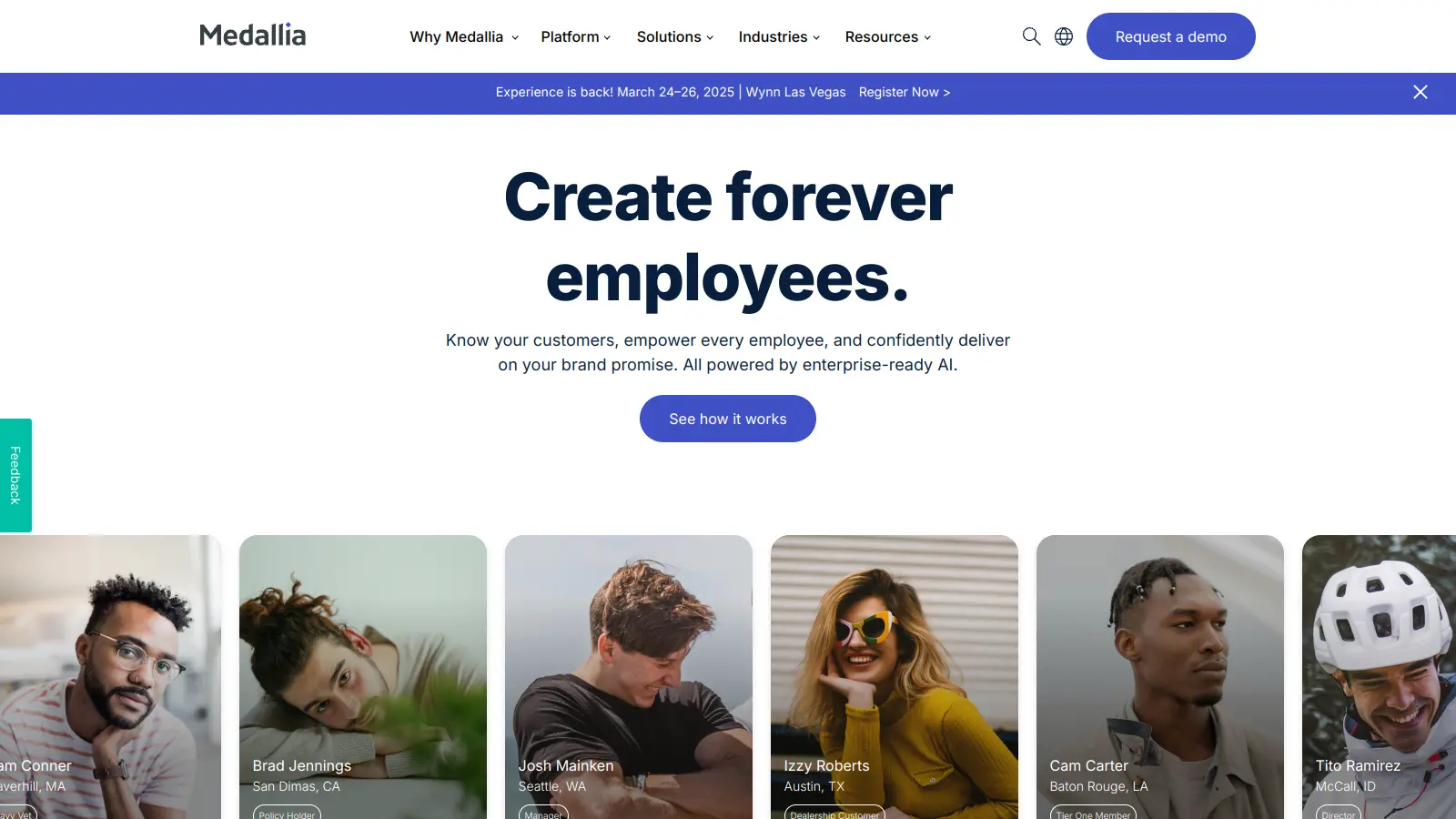
Medallia is an enterprise experience management platform that captures and analyzes customer and employee feedback across multiple channels. Using AI-driven analytics, it helps businesses improve satisfaction, loyalty, and performance by providing real-time insights and actionable recommendations.

best deal

Get your personalized enterprise quote and see Medallia in action

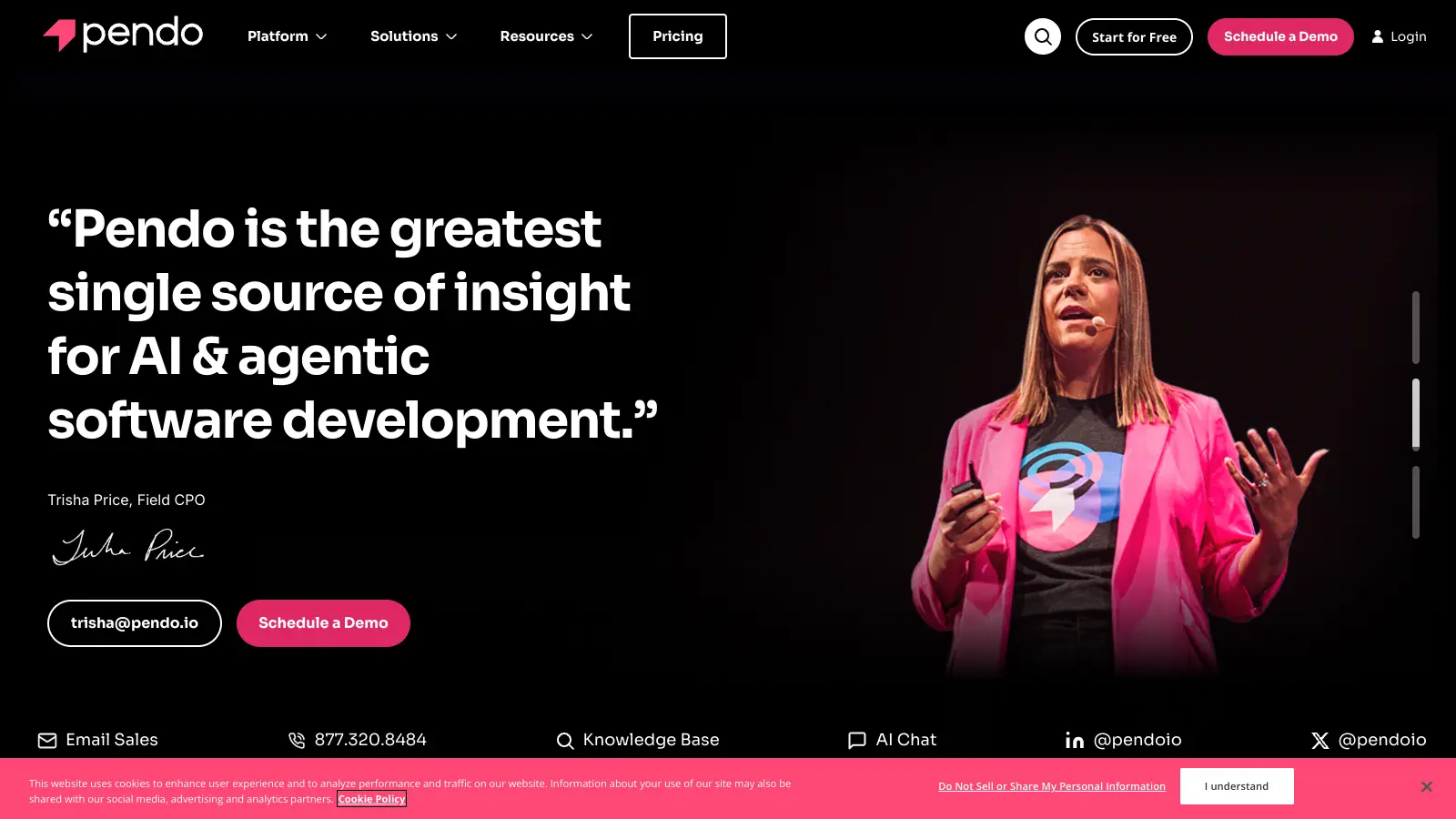
Pendo screenshot
online buzz12k
trend (1M)18%
3.8based on real user feedback, community sentiment, pricing value, and fit for target audience. see our full methodology

Pendo

Pendo is a product analytics platform that helps businesses understand user behavior, improve product experiences, and drive growth. It tracks user interactions across web, mobile, and AI interfaces, offers session replays and AI-powered insights, and provides tools for in-app guides, user feedback, and roadmapping.

best deal

30-day free trial available, or try the Free Plan with analytics, guides, and surveys for up to 500 monthly users